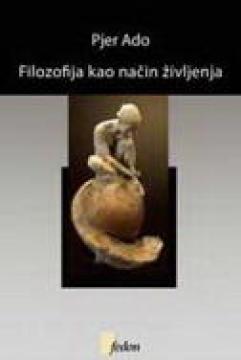
Filozofija kao način življenja: Razgovor sa Žani Karlije i Arnoldom I. Dejvidsonom
In the book of interviews, Pierre Hadot explains through his personal life story and conversations with Jeannie Carlier and Arnold I. Davidson why ancient philosophy was above all a way of life and a spiritual exercise, and not just theoretical knowledge.
The book is not Hadot's classic scholarly work, but rather a long interview (conversation) conducted with him by the French Hellenist Jeannie Carlier and the American philosopher Arnold I. Davidson. It was originally published in French in 2001.
The book has a distinctly autobiographical and introspective character. Hadot, through his life journey – from childhood and Catholic upbringing, through his studies, World War II, encounters with great thinkers of the 20th century, and up to his professorship at the Collège de France – explains the fundamental thesis of his lifelong philosophy: ancient philosophy was not an academic discipline, but a concrete way of life and a system of spiritual exercises aimed at transforming oneself and achieving wisdom.
In the interview, Hadot elaborates in detail:
- What were the ancient "spiritual exercises" (meditation on death, observation of the universe, concentration on the present moment, introspection, etc.)
- The difference between philosophical discourse and philosophy itself as a life practice
- How schools (Stoicism, Epicureanism, Platonism, Cynicism) offered different "forms of life"
- Why modern philosophy lost this existential dimension
- A personal encounter with the reading of Marcus Aurelius and other ancient authors
The style is extremely accessible, warm and personal - much more lively and readable than his strict scientific works. The book serves as an excellent introduction to Hadot's thought and also as his intellectual autobiography. The book has become very popular among readers interested in practical philosophy, Stoicism and ancient wisdom. It represents an ideal entry into Hadot's work before reading his more difficult titles such as Spiritual Exercises and Ancient Philosophy or The Inner Fortress. The work emphasizes that philosophy today can (and should) once again become an art of living, and not just a professional academic activity.
One copy is available