Maksim Gorki
Maxim Gorky (real name Alexei Maksimovich Peshkov) was born on March 28, 1868 in Nizhny Novgorod and died on June 18, 1936 in Moscow. He was a Russian writer, revolutionary, and political activist. His name became synonymous with social realism and literature dedicated to the working class.
He grew up in difficult conditions, and after the death of his parents, he was forced to work various jobs. Strong social sensitivity shaped his creativity, and he translated the experiences of his youth into literary works. He became one of the key Russian writers of the turn of the 19th to the 20th century and an important ideologist of socialist realism.
His most important works include:
Autobiographical trilogy: Childhood (1913), In the World (1916), My Universities (1923)
Novel Mother (1906) – a key novel of social realism
Short stories and collections: Around Russia (1923), Fairy Tales of Italy (1911), Russian Fairy Tales
Drama At the Bottom (1902) – one of his most famous theatrical works
Gorky was active in political life, participated in the 1905 revolution, lived in exile, and returned to the USSR in 1932, where he became a symbol of Soviet literature.
Naslovi u ponudi
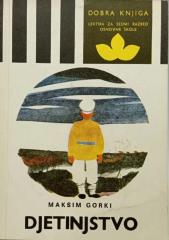
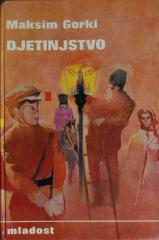
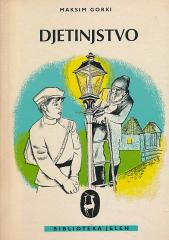
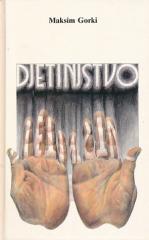
Djetinjstvo
„Kindheit“ erzählt von der Grausamkeit des Erwachsenwerdens, dem kargen und schwierigen Leben in einer russischen Provinz.
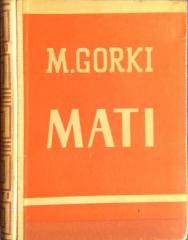
Mati
Maxim Gorkis Roman „Mutter“ erschien 1906 und ist eines der Schlüsselwerke des russischen Sozialrealismus. Das Werk schildert das Erwachen der Arbeiterklasse in Russland anhand von Charakteren und Ereignissen, die soziale Ungerechtigkeiten und die Notwend
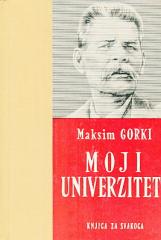
Moji univerziteti
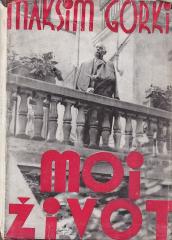
Autobiographical trilogy - Childhood, In the world, My universities. Judging by some of his letters and works, Gorki conceived this trilogy as early as 1893 and wrote it from 1913 to 1923.
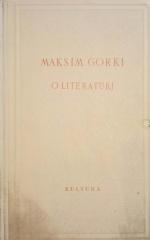
O literaturi
The first third of the book provides reviews of Russian literature (Chekhov, Ljeskov, Pushkin...). The second chapter deals with world literature (Balzac, Stendhal, Roland...), and the third chapter contains general articles.