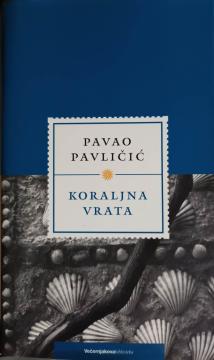
Koraljna vrata

Koraljna vrata

Pavao Pavličić

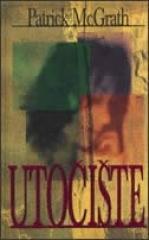
How to persuade high school students to read Gundulić's Osman? The question is difficult, but the answer is simple. So that they read Pavličić before Gundulić.

The novel Koraljna vrata (first published in 1990) encourages a look in the literary-historical rear-view mirror. With this novel, the baroque epic is sewn into contemporary Croatian literature. Pavličić's 13th novel in a row is written in 20 chapters. Gundulić's Osman was sung in 20 cantos. The novel Koraljna vrata begins with the moment when the philologist Krsto Brodnjak, at the age of 33 (!), and in search of undiscovered manuscripts of older Croatian literature, arrives on the island of Lastovo. The discovery of the lost parts of Osman is connected with the disruption of the relationship between good and evil.

The reader is drawn into the story as if he himself, like Brodnjak, fell into the emptiness of the epic. And that is the most that a writer can achieve with his text.

The novel was written in the summer of 1989, the year of the great anniversary of Ivan Gundulić (1589 – 1638). In the same year, Pavao Pavličić gave a lecture entitled The Letters of Osman at the Gundulić Conference. This text, and how useful it is for interpreting and evaluating the novel, is being published for the first time with Koraljna vrata.

Editor
Branka Primorac, Seid Serdarević
Illustrations
Stanko Abadžić
Graphics design
Vanja Cuculić
Dimensions
21 x 13 cm
Pages
215
Publisher
Večernji list, Zagreb, 2004.
 
Latin alphabet. Hardcover with dust jacket.
Language: Croatian.
ISBN
9-53-716102-1

Multiple copies are available

Copy number 1

Condition:Unused

Copy number 2

Condition:Used, excellent condition

Copy number 3

Condition:Used, excellent condition
 

Are you interested in another book? You can search the offer using our search engine or browse books by category.

You may also be interested in these titles

Dani hvarskog kazališta. Počeci u hrvatskoj književnosti i kazalištu

Dani hvarskog kazališta. Počeci u hrvatskoj književnosti i kazalištu

Maja Bošković Stuli, Dunja Fališevac, Milovan Tatarin, Lahorka Plejić Poje, Pavao Pavličić, Helen...
Hrvatska akademija znanosti i umjetnosti (HAZU), 2008.
Croatian. Latin alphabet. Paperback.
9.99
Nevidljivo pismo

Nevidljivo pismo

Pavao Pavličić

The Invisible Letter by Pavle Pavličić is a crime novel in which a mysterious letter written in invisible ink triggers an investigation that leads to forgotten events, hidden motives, and a crime.

Znanje, 1993.
Croatian. Latin alphabet. Hardcover with dust jacket.
5.99
Godan

Godan

Munshi Prem Chand
Kosmos, 1960.
Serbian. Latin alphabet. Paperback.
4.22 - 4.26
Glad na ledini

Glad na ledini

Agustin Stipčević
Zora, 1968.
Croatian. Latin alphabet. Hardcover with dust jacket.
5.22
Magična ljubavna kutijica

Magična ljubavna kutijica

Santa Montefiore

The Magic Love Box (2002) follows the life story of Federica Campione, which begins in Vina del Mar, Chile, in the summer of 1982. Montefiore creates an epic story of growth, where the magic is not only in the box, but in the courage to let go of the past

Mozaik knjiga, 2006.
Croatian. Latin alphabet. Hardcover.
7.34
Zagrepčanka

Zagrepčanka

Branislav Glumac

Branislav Glumac published a novel without periods or commas in 1974, as the relentless stream of thought of a young rebel. Published in socialist Yugoslavia, the work caused a scandal with its openness and became a classic about generational rebellion.

IROS, 1986.
Croatian. Latin alphabet. Hardcover.
8.24