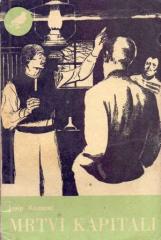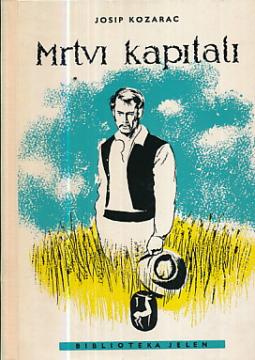
Mrtvi kapitali

Mrtvi kapitali

Josip Kozarac

"Dead Capitals" (1890) is one of the most important works of Croatian realism and a strong critique of the social stagnation of the time. The novel shows the economic and social neglect of Slavonian villages under the Austro-Hungarian Empire through the c

Đuro, an educated returnee from abroad, comes to his native region with the aim of modernizing forestry and agriculture, but he faces inaction, ignorance and resistance from the local population. His attempts to raise awareness about the exploitation of natural resources encounter obstacles due to the greed of the rich, the neglect of the village and the carelessness of state institutions.

The very title of the novel tells us how Kozarac was preoccupied with the uncultivated, dead land that awaits a man, a hardworking farmer who will cultivate it. He called it “dead capital”. The plot is based on the fate of two sisters and a love story. Through the plot of the novel, Josip Kozarac wanted to show the contrast between the village and the city. According to him, the village is described as a place where sincere feelings, happiness and purity prevail, while the city is a place of idleness and decadence.

Editor
Grigor Vitez, Oto Šolc
Titelseite
Josip Vaništa
Maße
20 x 14 cm
Seitenzahl
124
Verlag
Mladost, Zagreb, 1961.
 
Latein Schrift. Taschenbuch mit Einband.
Sprache: Kroatisch.

Es werden zwei Exemplare angeboten

Kopiennummer 1

Zustand:Gebraucht, in ausgezeichnetem Zustand
Nachteile/Unannehmlichkeiten:
  • Traces of patina
  • Signature of previous owner
Zum Warenkorb hinzugefügt!

Kopiennummer 2

Zustand:Gebraucht, in ausgezeichnetem Zustand
Nachteile/Unannehmlichkeiten:
  • Traces of patina
  • Signature of previous owner
Zum Warenkorb hinzugefügt!
 

Interessieren Sie sich für ein anderes Buch? Sie können das Angebot über unsere Suchmaschine suchen und finden oder Bücher nach Kategorien durchsuchen.

Diese Titel könnten Sie auch interessieren

Među svjetlom i tminom

Među svjetlom i tminom

Josip Kozarac
Glas Slavonije, 1974.
Kroatisch. Latein Schrift. Hardcover.
4,99 - 5,98
Mrtvi kapitali

Mrtvi kapitali

Josip Kozarac
Zora, 1962.
Kroatisch. Latein Schrift. Taschenbuch.
1,32 - 2,16
Zbogom Slavonijo 2

Zbogom Slavonijo 2

Josip Kozarac
Privlačica, 1987.
Kroatisch. Latein Schrift. Taschenbuch.
3,99
Kako smo lomili noge

Kako smo lomili noge

Miro Gavran

Der Roman „Wie wir uns die Beine brachen“ (1997), eine humorvolle und einfühlsame Chronik des Familienlebens durch vier Jahrzehnte kroatischer Geschichte, verfolgt das Schicksal dreier Generationen einer slawonischen Familie von 1951 bis 1992.

Mozaik knjiga, 2007.
Kroatisch. Latein Schrift. Taschenbuch.
9,36
Pobeda i poraz

Pobeda i poraz

Jara Ribnikar

Dies ist eines ihrer bedeutendsten Werke, das ihr Engagement für soziale Themen und die Entwicklung ihres literarischen Stils widerspiegelt, der sich allmählich von der schematischen Sozialprosa hin zu einer moderneren Erzählstruktur bewegte.

Svjetlost, 1963.
Kroatisch. Latein Schrift. Taschenbuch.
3,82
Doberdob

Doberdob

Prežihov Voranc
Branko Đonović, 1964.
Serbisch. Latein Schrift. Hardcover.
3,88 - 3,90