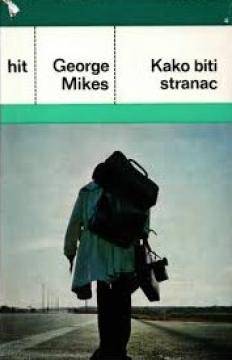
Kako biti stranac

Kako biti stranac

George Mikes

How to Be a Foreigner by George Mikes is a humorous book in which the author, as an immigrant from Hungary, humorously describes British customs, mentality, and everyday life from the perspective of a foreigner.

How to Be a Foreigner is the most famous work of the Hungarian-British writer and journalist George Mikes. The book was based on the author's experiences after moving from Hungary to England and presents a humorous account of British society seen through the eyes of a foreigner. Although it was published immediately after World War II, it remained popular due to its universal humor and insightful observations about national characters.

The work is not a novel with a classic plot, but a collection of interconnected humorous essays and short chapters. In them, Mikes describes his attempts to understand English customs, language and ways of thinking. He pays special attention to everyday situations such as conversations about the weather, rules of conduct, attitudes towards privacy, sports, food and social differences.

The author, with much irony, depicts the English as a people who value restraint, politeness and tradition, but at the same time often hide their feelings behind formal behavior. Many episodes are based on misunderstandings that arise due to cultural differences between a continental European and the British way of life. It is from these situations that most of the humor comes.

Mikes does not mock the English maliciously, but with warmth and sympathy. At the same time, he often jokes at his own expense, showing how a foreigner tries to adapt to a society whose rules are not always clear. His observations about identity, belonging, and cultural differences remain relevant today.

Original title
How to be an alien
Translation
Nikola Kršić
Editor
Nikola Kršić
Dimensions
19 x 12 cm
Pages
226
Publisher
Znanje, Zagreb, 1980.
 
Latin alphabet. Hardcover with dust jacket.
Language: Croatian.

One copy is available

Condition:Used, excellent condition
Discounted price: 5.424.06
25% discount is valid until 8/4/26 11:59 pm
 

Are you interested in another book? You can search the offer using our search engine or browse books by category.

You may also be interested in these titles

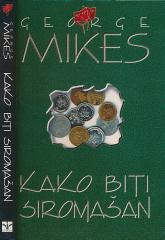
Kako biti siromašan

Kako biti siromašan

George Mikes

Humorist Georges Mikes, of Hungarian origin, spent part of his life in London. In this book, he selflessly teaches us how to stay poor.

Izvori, 1996.
Croatian. Latin alphabet. Hardcover.
6.98
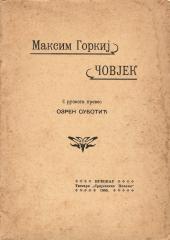
Čovjek

Čovjek

Maksim Gorki

Man by Maxim Gorky, translated by Ozren Subotić (Vukovar, 1905), is a philosophical and literary work that glorifies the dignity of man, his creative power, freedom of spirit, and the fight against social injustice.

Srijemske novine, 1905.
Croatian. Cyrillic alphabet. Paperback.
17.56
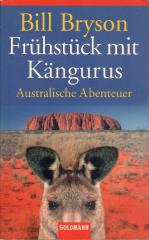
Frühstück mit Kängurus: Australische Abenteuer

Frühstück mit Kängurus: Australische Abenteuer

Bill Bryson

A mix of travelogue, history, science and sharp humor – the book shows why Australia is one of the most unusual and dangerous continents in the world, yet fascinating and appealing at the same time.

Wilhelm Goldmann Verlag, 2002.
German. Latin alphabet. Paperback.
6.24
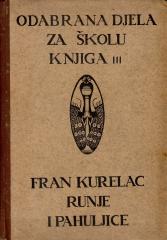
Runje i pahuljice

Runje i pahuljice

Fran Kurelac

Runje i pahuljice by Frano Kurelc is a collection of selected literary and journalistic texts in which the author reflects on language, literature, and Croatian national identity. The work combines scholarship, patriotism, and stylistic playfulness.

Vlastita naklada, 1916.
Croatian. Latin alphabet. Hardcover.
16.42
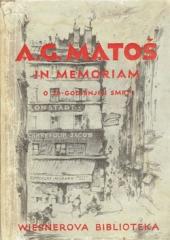
A. G. Matoš: In memoriam o 20-godišnjici pjesnikove smrti

A. G. Matoš: In memoriam o 20-godišnjici pjesnikove smrti

Antun Barac, Milan Ogrizović, Boža S. Nikolajević, Zdenko Vernić, Tin Ujević, Antun Branko Šimić,...

A memorial collection published in 1934 by Ljubo Wiesner (Wiesner's Library, vol. 1). The editorial and authorial lead was Antun Barac, with contributions from Milan Ogrizović, Tin Ujević, Ljubo Weisner and other Croatian writers and critics.

Naklada Ljube Wiesnera i Roka Matulića, 1934.
Croatian. Latin alphabet. Paperback with dust jacket.
9.24
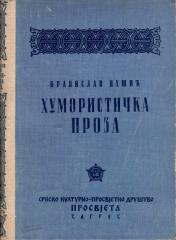
Humoristička proza

Humoristička proza

Branislav Nušić

Humorous prose brings together Nušić's autobiographical, essay-serial and narrative texts, in which humor and satire expose school, society, government and human weaknesses.

SKD Prosvjeta, 1951.
Serbian. Cyrillic alphabet. Hardcover.
7.645.73