Pijesak Orijenta

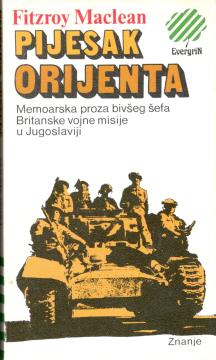
Pijesak Orijenta

Fitzroy MacLean

The memoir The Sands of the Orient (1949), part of the autobiographical work of the British diplomat, soldier and writer Fitzroy Maclean (1911–1996), describes his adventures in the diplomatic service and World War II.

Divided into three parts, the book focuses on "Eastern Approaches" – trips to the restricted zones of the USSR, Iran and Africa, and the mission in Yugoslavia. Maclean, the inspiration for James Bond, writes vividly, with humor and irony, celebrating adventure and geopolitical intrigue.

The first part takes you to Moscow in 1937, where Maclean, a young diplomat, observes the Stalinist purges and famine in Ukraine. Dissatisfied with diplomatic life, he travels around Central Asia under the guise of a journalist: he visits Samarkand, Bukhara and Kashgar, risking arrest by the NKVD. He meets nomadic tribes, describes exotic bazaars and conflicts between Marxism and Islam, emphasizing the contrast between Soviet propaganda and poverty. These "forbidden" trips symbolize his thirst for freedom and criticism of totalitarianism.

The second part goes to war: in 1941, Maclean joins the army and joins the SAS (Special Air Service) in North Africa. As a commander, he leads airborne attacks on Rommel's lines - they destroy the air forces at Benghazi and Tobruk, racing through the desert with minimal equipment. He describes tense night missions, losses and camaraderie, mocking bureaucracy. Then follows a mission in Iran in 1943: with a group of officers, he organizes the occupation of Tehran against pro-Nazi forces, meeting the Shah and British allies, and risking assassination.

The third part, the most famous, deals with Yugoslavia: as head of the British mission, Maclean parachutes into Durmitor in 1943-1944, joining Tito's partisans. He lives in caves, fights against Chetniks and Germans, organizing air supplies. He describes Tito as a charismatic leader, but also the brutality of war - massacres, famine and ideological conflicts. His role was crucial for Allied support for the partisans, changing the course of the war in the Balkans.

Original title
Eastern Approaches
Translation
Konstantin Miles
Editor
Zlatko Crnković
Graphics design
Alfred Pal
Dimensions
20 x 12 cm
Pages
167
Publisher
Znanje, Zagreb, 1981.
 
Latin alphabet. Paperback.
Language: Croatian.

One copy is available

Condition:Unused
 

Are you interested in another book? You can search the offer using our search engine or browse books by category.

You may also be interested in these titles

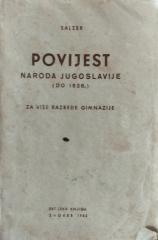
Povijest naroda Jugoslavije (1526)

Povijest naroda Jugoslavije (1526)

Olga Salzer
Školska knjiga, 1955.
Croatian. Latin alphabet. Paperback.
1.80
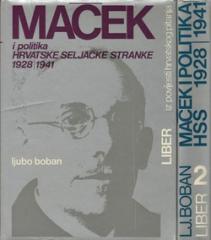
Maček i politika hrvatske seljačke stranke 1928-1941

Maček i politika hrvatske seljačke stranke 1928-1941

Ljubo Boban

Boban's book contains a solid, comprehensive and reliable treatment of the main points of the political path of Maček and the HSS in the era of Croatian and Yugoslav politics from 1928 to 1941.

Sveučilišna naklada Liber (SNL), 1974.
Croatian. Latin alphabet. Hardcover with dust jacket.
The book consists of two volumes
12.56 - 15.38
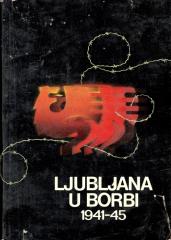
Ljubljana u borbi 1941–1945: Zbornik sećanja

Ljubljana u borbi 1941–1945: Zbornik sećanja

The collection brings together the memories of participants in the national liberation struggle in Ljubljana during World War II. The collection contains personal testimonies, which provide insight into the everyday life, struggle and sacrifices of the in

Vojnoizdavački zavod, 1978.
Serbian. Latin alphabet. Hardcover with dust jacket.
9.76
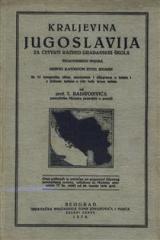
Kraljevina Jugoslavija za četvrti razred građanskih škola trgovinskog smjera

Kraljevina Jugoslavija za četvrti razred građanskih škola trgovinskog smjera

T. Radivojević
Izdavačka knjižarnica Tome Jovanovića i Vujića, 1938.
Croatian. Latin alphabet. Hardcover.
13.99
Zapisi iz oslobodilačkog rata, knjiga četvrta

Zapisi iz oslobodilačkog rata, knjiga četvrta

Rodoljub Čolaković
Matica hrvatska, 1952.
Croatian. Latin alphabet. Hardcover.
5.50
Dobri ljudi u vremenu zla

Dobri ljudi u vremenu zla

Svetlana Broz

The book Good people in the time of evil (1999) by Svetlana Broz is a collection of true stories from the war in Bosnia and Herzegovina (1992-1995), which bear witness to the humanity, solidarity and moral courage of individuals in the midst of conflict.

Media centar "Prelom", 2001.
Croatian. Latin alphabet. Paperback.
12.369.27