Petar Petrović-Njegoš
Petar II. Petrović Njegoš (13. November 1813 – 31. Oktober 1851), besser bekannt als Njegoš, war ein montenegrinischer Herrscher, Bischof, Dichter und Philosoph, dessen Werke zu den bedeutendsten der montenegrinischen Literatur zählen.
Er wurde im Dorf Njeguši nahe der damaligen montenegrinischen Hauptstadt Cetinje geboren. Er erhielt seine Ausbildung in verschiedenen montenegrinischen Klöstern und wurde nach dem Tod seines Onkels Petar I. zum geistlichen und politischen Führer des Landes. Nachdem er alle seine Gegner ausgeschaltet hatte, konzentrierte er sich auf die Vereinigung der Stämme Montenegros und die Errichtung eines Zentralstaates. Er führte ein Steuersystem ein, stellte Leibgarden auf und erließ eine Reihe neuer Gesetze, die die seiner Vorgänger ersetzten. Seine Steuerpolitik erwies sich bei den montenegrinischen Stämmen als äußerst unpopulär und führte während seiner Lebenszeit zu mehreren Aufständen. Die Herrschaft Njegoš' war geprägt von ständigen politischen und militärischen Auseinandersetzungen mit dem Osmanischen Reich und seinen Bestrebungen, das Territorium Montenegros zu erweitern, bis er schließlich die uneingeschränkte Anerkennung der Hohen Pforte erhielt. Als Verfechter der Vereinigung und Befreiung des serbischen Volkes war er bereit, sich mit Serbien zu vereinigen und das religiöse Oberhaupt aller Serben zu werden (der heutige Patriarch der Serbisch-Orthodoxen Kirche). Obwohl die Vereinigung der beiden Länder zu seinen Lebzeiten nicht zustande kam, legte Njegoš einige der Grundlagen Jugoslawiens und führte moderne politische Konzepte in Montenegro ein.
Als Dichter und Philosoph hoch angesehen, ist Njegoš vor allem für sein Epos „Der Bergkranz“ bekannt, das als Meisterwerk der montenegrinischen, serbischen und jugoslawischen Literatur gilt. Njegoš blieb in Montenegro und den Nachbarländern einflussreich, und seine Werke prägten zahlreiche Gruppierungen, darunter serbische, montenegrinische und jugoslawische Nationalisten sowie Monarchisten und Kommunisten.
Titel im Angebot
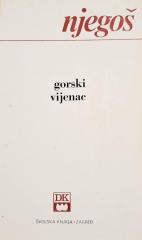
Gorski vijenac
Njegoš in Gorski vijenc besingt die „Untersuchung der Poturica“, ein Ereignis, das angeblich Ende des 17. Jahrhunderts in Montenegro stattfand, über das es in der Geschichtswissenschaft jedoch keine verlässlichen Informationen gibt.
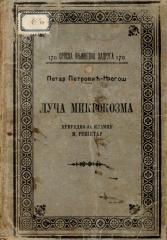
Luča mikrokozma
Ein philosophisch-religiöses Gedicht von Petar II. Petrović Njegoš (1845) über die Seele, den Kosmos, den Fall der Engel und das menschliche Schicksal. Der kosmische Flug der Seele und eine biblisch-mythologische Erzählung vom Kampf zwischen Gut und Böse,