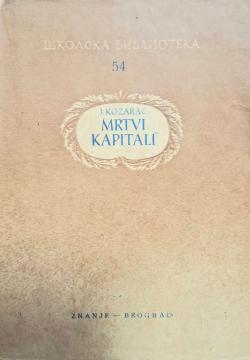
Mrtvi kapitali
Josip Kozarac’s celebrated socio-economic novel uses a story of love and family drama to critique the neglect of the native land, the craving for urban luxury, and the decline of the Slavonian village.
Dead Capital (1889) is one of the most significant works of Croatian Realism and the finest novel by the writer and forestry expert Josip Kozarac. In this socially engaged work, the author combines his literary talent with a deep understanding of the economic conditions in late 19th-century Slavonia, offering a sharp critique of the society of that time. The central motif of the novel is the concept of "dead capital"—referring not only to neglected and underutilized Slavonian land but also to human potential wasted due to the neglect of agriculture and the pursuit of an easy yet superficial urban lifestyle. Through the fates of two families and contrasting characters, Kozarac juxtaposes a healthy, industrious rural life against the perils of urban snobbery, indebtedness, and moral decay. The protagonist, Lešić, guides the young Anđelko toward the progressive and rational management of his estate, while romantic subplots further illuminate the characters and social strata of the era. Dead Capital remains a timeless study on the importance of hard work, the preservation of natural resources, and economic independence, securing its prominent place in Croatian literary heritage.
Angeboten wird ein Exemplar