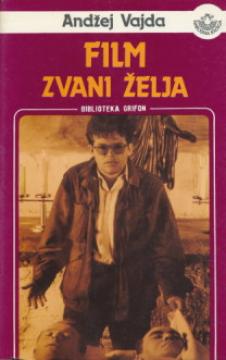
Film zvani želja

Film zvani želja

Andrzej Wajda

A book by a celebrated Polish director in which he talks about his films, as well as the social engagement of artists and "the conflict between social patronage and the personal world view of a director who makes films".

"I was never overly worried about the opinion of the government, about its reservedness or resistance to some of my films and projects. My real concern was the auditorium, especially when I couldn't get there. But it's time to finally say why I care was that freedom necessary? Why did the artist have to be free only to be able to delve into the soul of my society and express its hopes, its illusions! The state patron could not replace me In that task, why should the official know this secret better than I do? Is it by virtue of his profession? I don't think that the silence of the official cabinets and the scenarios that are discussed for a long time at the sessions, could lead to great success. On the contrary, such consultations result in ordinary stupas, creations without a human face, without a soul."

Übersetzung
Petar Vujičić
Maße
17 x 11 cm
Seitenzahl
159
Verlag
Narodna knjiga, Beograd, 1988.
 
Auflage: 5.000 Exemplare
 
Latein Schrift. Taschenbuch.
Sprache: Serbisch.

Angeboten wird ein Exemplar

Zustand:Gebraucht, in ausgezeichnetem Zustand
Zum Warenkorb hinzugefügt!
 

Interessieren Sie sich für ein anderes Buch? Sie können das Angebot über unsere Suchmaschine suchen und finden oder Bücher nach Kategorien durchsuchen.

Diese Titel könnten Sie auch interessieren

Marin Držić: pjesnik dubrovačke sirotinje

Marin Držić: pjesnik dubrovačke sirotinje

Živko Jeličić

Knjiga hrvatskog pisca i esejiste Živka Jeličića jedno je od najuticajnijih tumačenja Marina Držića. Jelčić tumači Držića kao pisca bliskog običnom narodu i kritičara društvenih nepravdi dubrovačke renesanse.

Novo pokoljenje, 1950.
Kroatisch. Latein Schrift. Taschenbuch.
6,24
Stolice

Stolice

Eugene Ionesco

"Chairs" is a one-act play by Eugène Ionesco, one of the most significant representatives of the theater of the absurd, premiered in 1952. This edition was printed on the occasion of the play's premiere at the Zagreb Drama Theater in 1958.

Zagrebačko dramsko kazalište, 1959.
Kroatisch. Latein Schrift. Taschenbuch.
7,26
Kazališne veze Osijeka i Pečuha / Eszék és Pécs színházi kapcsolata

Kazališne veze Osijeka i Pečuha / Eszék és Pécs színházi kapcsolata

Zvonimir Ivković

Knjiga daje temeljitu kroniku i analizu višestoljetnih kazališnih kontakata između dva grada – Osijeka i Pečuha – koji su kroz povijest dijelili kulturni prostor Panonske nizine, posebice u razdoblju Habsburške monarhije.

Matica hrvatska, 2012.
Kroatisch. Latein Schrift. Hardcover.
13,64
Zašto plačeš tata?

Zašto plačeš tata?

Ivica Ivanac

Riječ je o djelu koje se bavi teškim poslijeratnim temama, osobnim tragedijama, emocionalnim ranama i odnosima unutar obitelji, posebno između očeva i djece.

Zagrebačko dramsko kazalište, 1960.
Kroatisch. Latein Schrift. Taschenbuch.
2,98
Mimesis i konstrukcija

Mimesis i konstrukcija

Sabudin Musabegović

Knjiga „Mimesis i konstrukcija“ (2009.) autora Sabudina Musabegovića bavi se teorijskim promišljanjem umjetnosti, književnosti i načina na koji nastaje značenje u tekstu.

Akademija likovnih umjetnosti, 2009.
Kroatisch. Latein Schrift. Taschenbuch.
9,85
Kako što nastaje: novine, film, teatar

Kako što nastaje: novine, film, teatar

Karel Čapek

U duhovitom i poučnom eseju Čapek opisuje kako nastaju novine, film i kazališna predstava. Kroz humor i ironiju pokazuje složenost procesa – od ideje do realizacije – i različite perspektive sudionika, demistificirajući stvaralaštvo medija i umjetnosti.

Znanje, 1985.
Kroatisch. Latein Schrift. Taschenbuch.
4,76