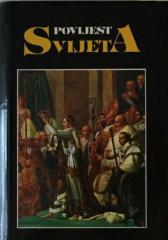
Povijest #4: Rimsko carstvo

Povijest #4: Rimsko carstvo

Transition from Roman Republic to Empire: The Roman Republic weakens due to internal strife and civil wars. The First Triumvirate (Caesar, Pompey, Crassus) undermines the power of the Senate. Caesar's dictatorship and assassination (44 BC) lead to the rise of Octavian, who in 27 BC becomes Augustus, the first Roman emperor, establishing a principate.

Development and height of the Empire: Augustus reorganizes Rome, introducing standardized money, taxes, bureaucracy, a professional army, police, and firefighters. He supports the arts (Virgil, Horace) and uses plays for propaganda. The empire reaches its peak under Trajan (117), conquering Armenia and Mesopotamia. Rome rules over Hellenistic lands and Celtic regions, spreading Roman culture, law, and architecture. Hellenistic influence is seen in art, while Roman infrastructure (roads, aqueducts) supports expansion.

Society, culture and religion: Roman society was stratified, with patricians, plebeians and slaves. Christianity spread, despite early persecution, becoming a key factor in the later Empire. Cultural achievements include Roman law and architecture (Colosseum, Pantheon).

The Fall of the Empire: After Trajan, the Empire faced crises: economic problems, internal conflicts and barbarian incursions. In 395, Theodosius divided the Empire into Western and Eastern, weakening the West, which collapsed in 476 with the overthrow of Romulus Augustulus. The Eastern Empire (Byzantine) continued until 1453. Roman legacy shaped Western institutions.

Original title
L'Impero romano
Editor
Enrico Cravetto, Damir Salopek
Illustrations
Adom Macheroni
Dimensions
22 x 14 cm
Pages
671
Publisher
Europapress holding, Zagreb, 2007.
 
Latin alphabet. Hardcover.
Language: Croatian.
ISBN
978-9-53300-038-1

One copy is available

Condition:Used, excellent condition
 

Are you interested in another book? You can search the offer using our search engine or browse books by category.

You may also be interested in these titles

Arktička pradomovina Veda

Arktička pradomovina Veda

Bal Gandahar Tilak

The book The Arctic Homeland of the Vedas (1903) by the Indian scholar Tilak proposed the hypothesis that the ancient Aryans, the authors of the Rigveda, originated in the Arctic region. Although controversial, the book remains important in the study of V

NIRO Književne novine, 1987.
Serbian. Latin alphabet. Paperback.
17.56
Užasi povijesti: Strašni Egipćani

Užasi povijesti: Strašni Egipćani

Terry Deary, Peter Hepplewhite

The book depicts life in ancient Egypt in a humorous and entertaining way. Readers learn about the pharaohs, mummies, pyramids, gods, and the everyday life of Egyptians through interesting facts.

Egmont, 2002.
Croatian. Latin alphabet. Paperback.
8.32
Armagedonske bitke: Megido i Jizreelska dolina od Brončanoga do Nuklearnoga doba

Armagedonske bitke: Megido i Jizreelska dolina od Brončanoga do Nuklearnoga doba

Eric H. Cline

The book by a world-renowned archaeologist and historian explores Megiddo (Hebrew: Har Megiddo, Greek: Armageddon) and the Jezreel Valley as the bloodiest battlefield in world history. Over 4,000 years, 34 major battles were fought in this strategic pass.

Stari grad, 2005.
Croatian. Latin alphabet. Hardcover.
15.2210.65 - 15.3410.74
U zemlji muza: Opis značajnih gradova, arheoloških lokaliteta i predjela Grčke

U zemlji muza: Opis značajnih gradova, arheoloških lokaliteta i predjela Grčke

Uroš Pasini
Laus, 1996.
Croatian. Latin alphabet. Paperback.
7.52
Drevni Egipat

Drevni Egipat

Wendy Boase

Expert book on ancient Egypt for children and young people.

Školska knjiga, 1979.
Croatian. Latin alphabet. Hardcover.
5.32 - 6.84
Kultura neandertalaca: Čuvari drevne mudrosti

Kultura neandertalaca: Čuvari drevne mudrosti

In this strongly documented book, the British psychologist and researcher claims that Neanderthals were the bearers of an older, more powerful, and spiritually richer culture than Cro-Magnon ("modern" man), and that it was their tradition that formed the

Stari grad, 2006.
Croatian. Latin alphabet. Hardcover.
14.2410.68 - 14.28