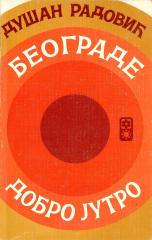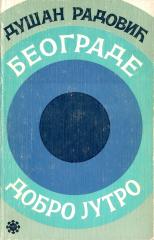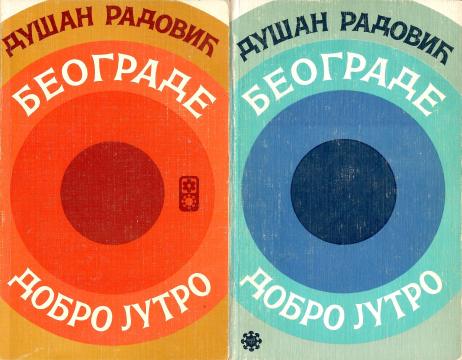
Beograde, dobro jutro I–II
A collection of aphorisms and poetic observations by Dušan Radović from the show "Belgrade, good morning" on Studio B (1977–1978). Witty, ironic and warm miniatures about Belgrade, its people, politics and everyday life – a diary of the city through wit a
Belgrade, good morning I–II is a pocket edition of BIGZ from 1981, which combines the first and second books of the series of the same name by Dušan Radović (Duška Radović, 1922–1984). The texts were selected from his morning shows on the First Program of Studio B (from 1977 onwards), where every morning at 7:15 a.m. from the top of Beograđanka, he "greeted Belgrade" with short, condensed prose miniatures - aphorisms, poetic observations, ironies and wise comments.
The first book (originally 1977, reproduced here) covers the show's beginnings: fresh, witty texts about Belgrade's everyday life, pubs, trams, bureaucracy, love, politics and little people. The second book (1977–1978) continues the same spirit, but with an even greater dose of irony and criticism – Radović dissects social flaws, hypocrisy, conformity, but always with warmth towards the city and its people. The texts are short (1–2 minutes of reading), rhythmic, easy to remember – often quoted: “Until we think for ourselves, we all think the same”, “Belgrade is a city where the same man is loved and hated the most”, etc.
Radović’s style is unique: a mixture of lyricism, satire, folk wisdom and urban wit – without pathos, but with a deep sense of human destiny. The show was a cult phenomenon in the 70s and 80s: Belgraders waited for his voice to start the day, and the texts created a critical spirit of the city. The books skipped what was “lukewarm and thin” or temporary – what remained was permanent, anthological.
The 1981 edition of BIGZ is a pocket classic, popular among readers - later the third book (1984) and collected editions were published. The cycle remained a symbol of Belgrade wit and resistance through humor - Radović was "the last great Belgrade chronicler" before his death in 1984. Today, the texts are quoted, adapted and remembered as part of urban mythology.
Das Buch besteht aus zwei Bänden.
Angeboten wird ein Exemplar.