Žabe

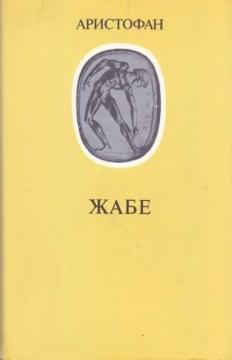
Žabe

Aristofan

A comedy in which the god Dionysus descends into the underworld to bring the best tragedian back to Athens. Aeschylus and Euripides clash in an underground competition, and the comedy humorously discusses the fate of tragedy, art, and Athenian society in

The Frogs (405 BC) is one of the most famous and important comedies of Aristophanes. It was performed at the Lenaia immediately after the deaths of Euripides and Sophocles, at a time when Athens was in a deep political and moral crisis before its final defeat in the Peloponnesian War.

The god Dionysus, disappointed with contemporary tragedy, decides to descend to Hades to bring back Euripides, whom he considers the best poet. In the underworld, he encounters real chaos – Euripides and Aeschylus argue over who is the greater tragedian. Dionysus becomes the judge in a great literary competition in which the style, moral message, language and social usefulness of their tragedies are compared.

Through this ingenious parody, Aristophanes provides a deep and humorous critique of Athenian tragedy, but also of society as a whole. Aeschylus represents an old, heroic, moral and patriotic tragedy, while Euripides symbolizes a modern, rationalist, psychological and “democratic” drama. In the end, Dionysus chooses Aeschylus as the one who can "save" Athena.

Frogs is a masterpiece of literary criticism in dramatic form. In addition to satire on Euripides and Socrates, the comedy contains beautiful choruses of frogs and initiates, witty scenes and serious thoughts about the role of art in society. The work stands out for its richness of language, musicality and depth - it is simultaneously entertaining and philosophically serious. It is considered one of the highlights of Aristophanes' oeuvre and an indispensable work of ancient literature.

Frogs are still relevant today because they ask eternal questions: Which art is better? What art does a society in crisis need? And can art save the country?

Titel des Originals
Βάτραχοι
Übersetzung
Radmila Šalabalić
Maße
20,5 x 13,5 cm
Seitenzahl
291
Verlag
Matica srpska, Novi Sad, 1987.
 
Auflage: 10.000 Exemplare
 
Kyrillisch Schrift. Fester Einband mit Schutzumschlag.
Sprache: Serbisch.

Es werden zwei Exemplare angeboten
Kopiennummer 1

Zustand:Ungebraucht
Zum Warenkorb hinzugefügt!

Kopiennummer 2

Zustand:Gebraucht, in ausgezeichnetem Zustand
Zum Warenkorb hinzugefügt!
 

Interessieren Sie sich für ein anderes Buch? Sie können das Angebot über unsere Suchmaschine suchen und finden oder Bücher nach Kategorien durchsuchen.

Diese Titel könnten Sie auch interessieren

Ptice

Ptice

Aristofan

Aristophanes' fantastischste Komödie. Zwei Athener überreden aus Langeweile Vögel, eine neue Stadt in den Wolken zu errichten – Nephelokokygia (Wolkenkuckucksstadt). Der Traum von einer idealen Gesellschaft verwandelt sich in eine kühne Utopie und eine Pa

VPA, 1988.
Kroatisch. Latein Schrift. Taschenbuch.
7,99
Zar bih ti lagala?

Zar bih ti lagala?

Francesca Clementis

Urkomische und gefühlvolle romantische Komödie voller Humor, peinlicher Situationen und Lektionen über die Wahrheit in Beziehungen. Schnelles Tempo, witzige Dialoge, Charaktere, mit denen man sich leicht identifizieren kann, und Lügen, die zu unerwarteten

Marjan tisak, 2006.
Kroatisch. Latein Schrift. Taschenbuch.
5,26
Figarova ženidba ili Ludi dan: Komedija u pet činova

Figarova ženidba ili Ludi dan: Komedija u pet činova

Pierre-Augustin Caron de Beaumarchais

Die Komödie „Die Hochzeit des Figaro oder Der verrückte Tag“ (1784) ist eine Fortsetzung des Barbiers von Sevilla. Die Hochzeit des Figaro kritisiert soziale Ungerechtigkeiten anhand von Liebesaffären und Intrigen und feiert Figaros und Susannas Einfallsr

Srpska književna zadruga (SKZ), 1925.
Serbisch. Kyrillisch Schrift. Hardcover.
7,585,31
Savršena komedija

Savršena komedija

Cora Carmack

Diese romantische Komödie, der zweite Teil der Losing It-Reihe, untersucht, wie aus einer Scheinbeziehung wahre Liebe werden kann. Voller Humor, Wärme und neu entdeckter Leidenschaft macht sich der Roman über die Ängste junger Menschen vor familiären Erwa

24 sata, 2016.
Kroatisch. Latein Schrift. Taschenbuch.
4,32
Sve je dobro što se dobro svrši

Sve je dobro što se dobro svrši

William Shakespeare

Ende gut, alles gut gehört zu Shakespeares sogenannten „schwarzen“ oder „problematischen“ Komödien.

Nakladni zavod Matice hrvatske, 1977.
Kroatisch. Latein Schrift. Fester Einband mit Schutzumschlag.
5,32
Komedije

Komedije

Jovan Sterija Popović

Die Sammlung aus dem Jahr 1963 präsentiert klassische Werke der serbischen Literatur, die für ihre Aktualität und universellen Themen von Bedeutung sind.

Branko Đonović, 1963.
Serbisch. Latein Schrift. Hardcover.
2,98