Political-historical essays
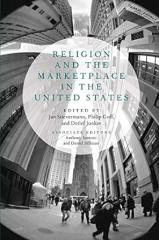
Religion and the Marketplace in the United States
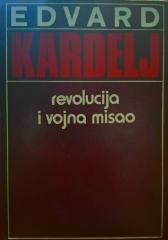
Revolucija i vojna misao
The book has a theoretical-political character and reflects the official ideology and security concept of Yugoslavia in that period.
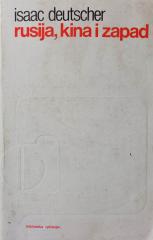
Rusija, Kina i Zapad: suvremena kronika događaja 1953.–1966.
This collection of political essays and analysis by Isaac Deutscher covers key events from 1953 to 1966, providing insight into the relationship between the Soviet Union, China, and the Western powers.
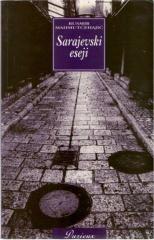
Sarajevski eseji: politika, ideologija i tradicija
What is possible to do in the face of the mystery of trust as a mediated relationship between people and the unknown of confidence as the dark content of freedom and the interactions of people?

Savremena Evropa ili karakteristika evropskih država i naroda
Contemporary Europe (1905) is a political journalistic work by Stjepan Radić in which the author analyzes European states, peoples, cultures and political systems, as well as the place of Slavic peoples in contemporary Europe.
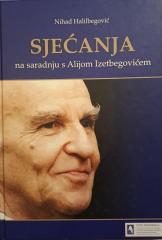
Sjećanja na saradnju s Alijom Izetbegovićem
Nihad Halilbegović's book is a memoir testimony of long-term professional and personal cooperation with Alija Izetbegović, the first president of independent Bosnia and Herzegovina.
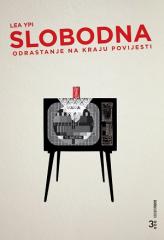
Slobodna: Odrastanje na kraju povijesti
"Free" is a memoir about growing up amidst political turmoil, about a family whose history is intertwined with the history of the country, and also an insightful reflection on the limits of progress and the burden of the past.
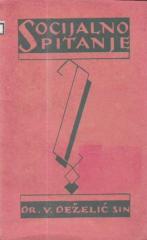
Socijalno pitanje
Social Issue (1926) is a shorter study of the Catholic approach to social problems. It emerged from lectures by the Croatian Catholic Movement and deals with the labor question, inequality, and Christian solutions in contrast to socialism and liberalism.
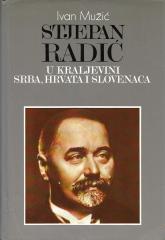
Stjepan Radić u Kraljevini Srba, Hrvata i Slovenaca
A detailed biography of Stjepan Radić in the period from 1918 until his death in 1928. The author uses archival and other documentation to provide a new evaluation of the Croatian historical and political reality between the two world wars.
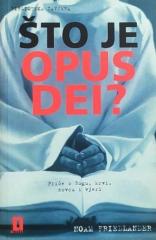
Što je Opus Dei? Priče o Bogu, krvi, novcu i vjeri
The Catholic movement Opus Dei, founded in 1928 in Spain as a small devout group, is today one of the most influential and richest church organizations in the world – with millions of members, a headquarters in New York worth billions, and branches across