Herman Wouk
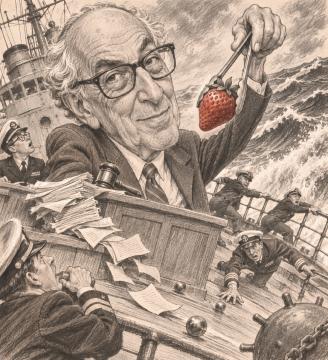
Strawberries go missing aboard a warship. Captain Queeg launches an investigation, and the crew begins to wonder whether a man who commands like this can get the ship safely through a storm. In The Caine Mutiny (1951), Herman Wouk (1915–2019) turns a small incident in the ship’s pantry into a question about the limits of obedience. When officers take command in the middle of a typhoon, a court-martial must decide whether they saved the ship or committed mutiny. The novel won the Pulitzer Prize in 1952. Humphrey Bogart played Queeg in the 1954 film adaptation.
Wouk was born in New York to Jewish immigrants from the Russian Empire. He graduated from Columbia University and wrote for radio. During the Second World War, he served in the US Navy in the Pacific. Everyday life aboard ship gave him material for The Caine Mutiny. He died in Palm Springs, California.
In Marjorie Morningstar (1955), a young New Yorker wants to become an actress and decide for herself what kind of life to lead. Wouk sets her ambitions and love affairs against the expectations of the Jewish family she grew up in. In This Is My God (1959), he draws on his own experience of Judaism to explain its customs and their meaning to readers encountering them for the first time.
In The Winds of War (1971) and War and Remembrance (1978), he follows the family of American naval officer Victor Henry. Their plans and separations give events on a vast historical scale a personal dimension. The second novel deals in particular with the Holocaust. Both books were adapted as television miniseries.
Wouk returned to historical fiction with The Hope (1993) and The Glory (1994), about Israel’s early decades. His gift for suspense is clearest when readers know what happened and still have to decide what to make of it. At the court-martial in The Caine Mutiny, the same action on deck looks different depending on who tells the story.
Titles in our offer
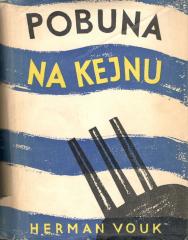
Pobuna na Kejnu
A Pulitzer Prize-winning war novel about a mutiny aboard an American naval vessel during the Second World War, exploring the limits of military obedience, authority and moral responsibility.
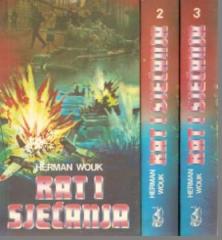
Rat i sjećanja
Ein epischer historischer Roman, eine Fortsetzung von „Die Winde des Krieges“. Der Autor verfolgt die Lebenswege der Helden des Romans, die in tragische Ereignisse verwickelt sind, ihr persönliches Drama, ihre Liebe, ihren Hass und ihre Freude bis zum End