John Dos Passos
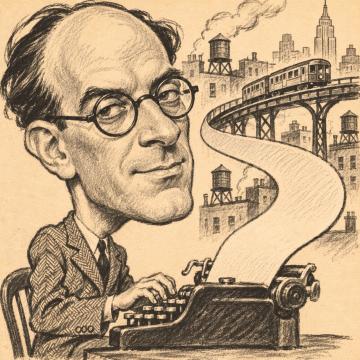
John Dos Passos (Chicago, 1896 – Baltimore, 1970) lets New York speak in several voices at once in Manhattan Transfer (1925). Street conversations, newspaper headlines and scenes from flats and offices follow one another as quickly as a passer-by on an avenue catches glimpses of other people’s lives. Among the faces that emerge from the crowd are journalist Jimmy Herf and actress Ellen Thatcher. Their paths cross, and the city that brings them together offers each a different version of success.
Dos Passos graduated from Harvard in 1916 and then spent time in Spain. During the First World War he drove an ambulance. His wartime experience informed Three Soldiers (1921), a novel about three American soldiers whose lives are shaped by the pressures of military hierarchy. He returned to Spain, its landscapes and its people in the travel book Rosinante to the Road Again (1922).
He extended the technique developed in Manhattan Transfer in the U.S.A. trilogy, comprising The 42nd Parallel (1930), Nineteen Nineteen (1932) and The Big Money (1936). Together, the novels follow American society from the turn of the twentieth century to the Great Depression. Between the stories of fictional characters, he inserts brief portraits of public figures, including Henry Ford.
In the Newsreel sections, he assembles headlines and fragments of popular songs. In the Camera Eye sections, personal memories unfold in a stream of consciousness. Public promises of progress and someone’s private disappointment can thus meet on the same page. This use of montage is what makes Dos Passos one of American modernism’s most distinctive writers.
During the Spanish Civil War, in 1937, he tried to find out what had happened to his friend and translator José Robles. Disagreement over Robles’s fate contributed to the end of his friendship with Ernest Hemingway. In his memoir The Best Times (1966), Dos Passos revisited his youth, his travels and the people he met while finding his voice as a writer.
Titles in our offer
42 paralela I-II
The first part of the epic trilogy U.S.A. John Dos Passos. A mosaic of the fate of ordinary Americans in the period from 1900 to the First World War – ambition, struggle for survival, social unrest and the birth of modern America.
Manhattan Transfer
John Dos Passos' novel, published in 1925, focuses on the development of urban life in New York City from the Gilded Age to the Jazz Age, told through a series of overlapping individual stories. It is considered one of Dos Passos's most important works.
Manhattan Transfer: Roman jednoga grada
Interwoven lives of journalists, actors, workers and immigrants reveal early twentieth-century New York, where ambition and money promise success but offer little protection from loneliness.
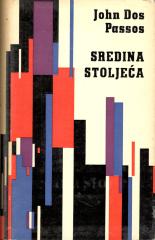
Sredina stoljeća
The novel "Midcentury" by John Dos Passos depicts America after World War II through the stories of entrepreneurs, workers, and politicians, revealing conflicts between capital and labor, corruption, and the struggle for power.