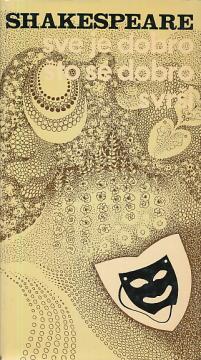
Sve je dobro što se dobro svrši

Sve je dobro što se dobro svrši

William Shakespeare

Ende gut, alles gut gehört zu Shakespeares sogenannten „schwarzen“ oder „problematischen“ Komödien.

Es entstand in der Zeit seines Lebens, als sein dramatisches Genie seine volle Kraft entfaltete. Die Anekdote, die er der Fabel zugrunde legt, entnahm er der neunten Geschichte des dritten Tages in Boccaccios Decameron...

Original title
All' s well that ends well
Translation
Antun Šoljan
Editor
Igor Zidić
Graphics design
Ivo Friščić
Dimensions
20 x 11.5 cm
Pages
135
Publisher
Nakladni zavod Matice hrvatske, Zagreb, 1977.
 
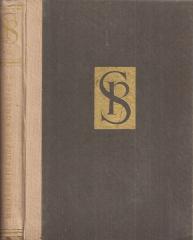
Latin alphabet. Hardcover with dust jacket.
Language: Croatian.

One copy is available

Condition:Used, excellent condition
 

Are you interested in another book? You can search the offer using our search engine or browse books by category.

You may also be interested in these titles

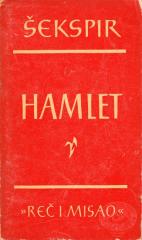
Hamlet

Hamlet

William Shakespeare
Rad, 1962.
Croatian. Latin alphabet. Paperback.
2.98 - 2.99
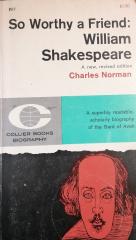
So worthy a friend

So worthy a friend

William Shakespeare
Collier Books, 1961.
English. Latin alphabet. Paperback.
3.99
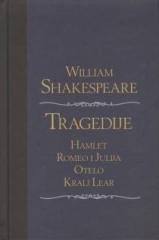
Tragedije: Hamlet / Romeo i Julija / Otelo / Kralj Lear

Tragedije: Hamlet / Romeo i Julija / Otelo / Kralj Lear

William Shakespeare

Meisterwerke des englischen Dramatikers, bekannt für ihre tiefen Emotionen, moralischen Dilemmata und tragischen Schicksale der Figuren. Alle Tragödien verbinden tiefe Psychologie, Gesellschaftskritik und universelle Themen und machen Shakespeare unsterbl

Globus, 2004.
Croatian. Latin alphabet. Hardcover.
3.62 - 6.42
Stotina godina (antikronika)

Stotina godina (antikronika)

Dario Harjaček

Der Roman „Hundert Jahre“ von Dario Harjaček bietet einen Panoramablick auf Trešnjevka und seine Bewohner im Laufe eines Jahrhunderts voller Veränderungen, Ideologien und menschlicher Schicksale – ein Mosaik von Zagreb, in dem Leben, Kunst und Geschichte

Oceanmore, 2025.
Croatian. Latin alphabet. Paperback.
13.42
Usta puna zemlje

Usta puna zemlje

Branimir Šćepanović

The novel "Usta puna zemlje" (1970), the masterpiece of the Serbian writer Branimir Šćepanović, is a psychologically in-depth explorer of the limits of the human soul, solitude and existential freedom, reminiscent of Kafka and Camus.

BIGZ, 1987.
Serbian. Latin alphabet. Paperback.
3.96 - 3.98
Deobe 1-3

Deobe 1-3

Dobrica Ćosić

This work, awarded the NIN Prize for that year, is considered one of the most significant in Serbian literature after World War II.

Prosveta, 1961.
Serbian. Cyrillic alphabet. Hardcover with dust jacket.
The book consists of 3 volumes
11.42