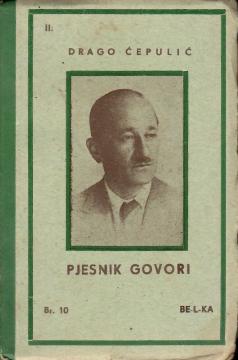
Pjesnik govori: filozofsko-estetske kozerije
Antique

Pjesnik govori: filozofsko-estetske kozerije

Drago Ćepulić

„Der Dichter spricht: Philosophisch-ästhetische Rätsel“ von Dragutin (Drago) Ćepulić ist eine Sammlung kurzer, nachdenklicher Essays, in denen der Autor auf witzige, aufschlussreiche und unaufdringliche Weise über Literatur, Kunst, Philosophie und mensch

Ćepulić verbindet philosophische Tiefe und ästhetische Sensibilität in Form von Koserija – leichten, oft ironischen Gesprächen und Reflexionen.

In dem Buch betrachtet der Dichter die Welt aus der Perspektive eines Künstlers, der nicht trocken theoretisiert, sondern dem Leben, der Natur, dem Zeitgeist und den beständigen Fragen der Existenz zuhört. Ćepulić geht oft von einfachen Alltagsmotiven aus, um tiefere Fragen zur Bedeutung der Kunst, der Rolle des Dichters, Wahrheit, Schönheit und Vergänglichkeit aufzuwerfen. Seine Gedanken sind gekleidet in sanften Humor, kritische Distanz und Liebe zur Sprache.

Der Schreibstil des Autors zeichnet sich durch Klarheit im Ausdruck, raffinierten Witz und ein Gespür für Proportionen aus, was es dem Leser ermöglicht, am Denkprozess teilzunehmen, ohne sich belastet oder müde zu fühlen. „Der Dichter spricht“ ist daher kein systematisches philosophisches Werk, sondern eine Reihe von Erkenntnissen und Überlegungen, die zum Nachdenken und zu emotionalen Reaktionen anregen.

Ćepulićs Ziegenbilder spiegeln den Zeitgeist wider, gehen aber auch über das aktuelle Geschehen hinaus und bieten universelle Gedanken zu Kunst und Leben. Sein Buch fordert auf unaufdringliche Weise zu einem tieferen Verständnis von Literatur und Philosophie als Teil des menschlichen Schicksals auf, wo das Wort des Dichters die Kraft hat, ein neues Licht auf das alltägliche Leben zu werfen.

Editor
Zlatko Milković
Dimensions
11.5 x 7.5 cm
Pages
128
Publisher
Minerva nakladna knjižara, Zagreb, 1943.
 
Latin alphabet. Paperback.
Language: Croatian.

One copy is available

Condition:Used, excellent condition
 

Are you interested in another book? You can search the offer using our search engine or browse books by category.

You may also be interested in these titles

Eseji, feljtoni, članci : proza

Eseji, feljtoni, članci : proza

Vladimir Rem

This book is a collection of prose texts that include essays, feuilletons, and articles.

Matica hrvatska, 1997.
Croatian. Latin alphabet. Paperback.
4.98
Antidnevnik prisjećanja: Pogled unatrag i unaprijed

Antidnevnik prisjećanja: Pogled unatrag i unaprijed

Vladimir Devidé

Vladimir Devidé, a Croatian mathematician, Japanologist and essayist, creates an intimate, fragmentary autobiography in Anti-Diary of Recollections through around twenty texts – essays, stories, humorous and satirical articles, travelogues, reflections an

Znanje, 1995.
Croatian. Latin alphabet. Paperback.
11.26
Skitam i pričam

Skitam i pričam

Momo Kapor

The book I'm wandering and talking was written for several years, and parts of it were published from Sunday to Sunday on the pages of the magazine Duga. Second, significantly expanded edition.

Znanje, 1982.
Serbian. Latin alphabet. Hardcover with dust jacket.
12.42
Pretapanja: Pannonius-Vrančić

Pretapanja: Pannonius-Vrančić

Helena Sablić Tomić

The book explores how different cultures and traditions intertwine and influence each other throughout history. Also, the book touches on the topics of identity, migration and transformation of societies.

Oksimoron, 2010.
Croatian. Latin alphabet. Hardcover.
14.62
Mrka kapa

Mrka kapa

Aristid Teofanović

Mrka kapa is a book of short prose written under the pseudonym Aristid Teofanović, used by Slobodan Blagojević. Blagojević is also known by the heteronym Anhel Antonić (poetry) and other works under his real name.

Feral Tribune, 2001.
Croatian. Latin alphabet. Paperback.
9.36
I drugi su pjevali o ratu: Odjeci raspada Jugoslavije u engleskoj i američkoj književnosti

I drugi su pjevali o ratu: Odjeci raspada Jugoslavije u engleskoj i američkoj književnosti

Muharem Bazdulj

In this book of essays, Muharem Bazdulj analyzes how the collapse of Yugoslavia and the wars of the 1990s resonated in Anglo-Saxon literature – from pre-war stereotypes to war and post-war depictions.

Biblioteka XX vek, 2013.
Croatian. Latin alphabet. Paperback.
8.24