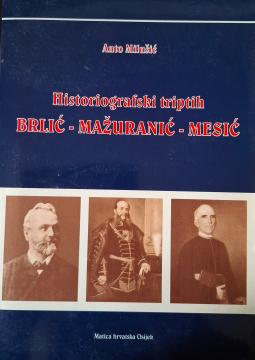
Historiografski triptih: Brlić - Mažuranić - Mesić

Historiografski triptih: Brlić - Mažuranić - Mesić

Anto Milušić

It presents an analytical account of three significant figures in Croatian history and literature: Andrija Torkvat Brlić, Ivan Mažuranić, and Vjekoslav Mesić. On 104 pages, the author explores their contributions in the context of Croatian historiography, political thought, and cultural identity. The book is part of the "Neotradicija" library and is available in paperback.

Dimensions
24 x 17 cm
Pages
109
Publisher
Matica hrvatska, Osijek, 1998.
 
Latin alphabet. Paperback.
Language: Croatian.

One copy is available

Condition:Used, excellent condition
 

Are you interested in another book? You can search the offer using our search engine or browse books by category.

You may also be interested in these titles

Djela #14: Bajke o Italiji / Ruske bajke / Balada o grofici Elen de Kursi

Djela #14: Bajke o Italiji / Ruske bajke / Balada o grofici Elen de Kursi

Maksim Gorki

"Tales of Italy" is a collection of short stories by Maxim Gorky, written during his stay in Italy at the beginning of the 20th century. "Russian Fairy Tales" is Gorky's interpretation of traditional Russian folk tales.

Kultura, 1948.
Croatian. Latin alphabet. Hardcover.
3.99
Kao da smo otac i kći

Kao da smo otac i kći

Julijana Matanović

Columns published by the author in the weekly magazine "Mila" from October 2002 to October 2003, united by the theme of recognition.

Profil International, 2004.
Croatian. Latin alphabet. Paperback.
3.96 - 3.98
Eseji

Eseji

Blaže Koneski
Svjetlost, 1982.
Serbian. Latin alphabet. Hardcover with dust jacket.
15.75 (set)
Rani dani - Kako smo odrastali uz filmove i televiziju

Rani dani - Kako smo odrastali uz filmove i televiziju

Goran Tribuson

In his autobiographical prose, Early Days (1997), Goran Tribuson evokes childhood and early adulthood in Bjelovar through the prism of film and television. An extraordinarily humorous story about ordinary life in the 1960s.

Znanje, 1997.
Croatian. Latin alphabet. Paperback.
8.24
Kako stoje stvari: Predavanje održano u Domu JNA u Zagrebu 17. 12. 1952.

Kako stoje stvari: Predavanje održano u Domu JNA u Zagrebu 17. 12. 1952.

Miroslav Krleža

In his lecture How Things Are (1952), Krleža discusses the political and cultural situation of post-war Yugoslavia, emphasizing the need for critical thought, cultural renewal, and resistance to dogmatism.

Zora, 1953.
Croatian. Latin alphabet. Paperback.
12.48
Rozalindin spol: eseji

Rozalindin spol: eseji

Jan Kott
Znanje, 1997.
Croatian. Latin alphabet. Paperback.
6.74