Pesme ne,traženi podaci

Pesme ne,traženi podaci

Luka Šteković

Poems not, requested data is the first and most famous collection of poems by Luka Šteković. The book immediately became a cult favorite among the younger generation and is one of the key titles of Croatian new poetry in the late 70s and early 80s.

Šteković writes in lowercase, without punctuation (except for occasional periods), often in the form of fragments or diary entries. His poetry is antipoetic at first glance, but behind the apparent banality lies a deep sadness and a feeling that “there is nothing more to say”. Unfortunately, Luka Šteković tragically died at the age of 29 just four years after the publication of the collection (1982). This is why “Pesme ne, traženi podatkovi” gained additional mythical status – it became the “last message” of a young poet who wrote and lived exactly as he did.

Dimensions
19 x 13.5 cm
Pages
47
Publisher
Luka Šteković, Virovitica, 1977.
 
Distribution: 500 copies
 
Latin alphabet. Paperback.
Language: Croatian.

One copy is available

Condition:Used, excellent condition
 

Are you interested in another book? You can search the offer using our search engine or browse books by category.

You may also be interested in these titles

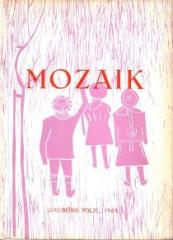
Mozaik

Mozaik

Stjepan Godić, Branka Jelić, Božo Miljanović, Vladimir Šelović, Luka Šteković, Milan Taritaš, Iso...
Narodno sveučilište "Petar Preradović", 1969.
Croatian. Latin alphabet. Paperback.
1.00 - 6.99
Susretanja

Susretanja

Ajka Tiro Srebreniković
Kulturno društvo Bošnjaka Hrvatske "Preporod", 2017.
Croatian. Latin alphabet. Paperback.
3.50
Pesme i proza

Pesme i proza

Đ. Leopardi
Rad, 1964.
Serbian. Latin alphabet. Paperback.
2.98
Crni zec (sabrane i nove pjesme)

Crni zec (sabrane i nove pjesme)

Drago Glamuzina

The title poem, "The Black Rabbit," represents a kind of symbolist maneuver within "real" poetry, because like Baudelaire's "Albatross," it possesses a pronounced unambiguous charge.

Vuković & Runjić, 2022.
Croatian. Latin alphabet. Paperback.
8.56 - 9.98
88

88

Nadija Rebronja

A piano usually has 88 keys, 52 white and 36 black, from which 88 tones emerge. A pianist usually reads 88 notes. These 88 micro-proses simultaneously constitute one piano and one piano concerto.

Buybook, 2022.
Croatian. Latin alphabet. Paperback.
5.944.16
Bosa

Bosa

Vanda Mikšić

Fusions in search of fragments of identity, in a combination of verses and prose fragments, are at the forefront of this collection.

MeandarMedia, 2024.
Croatian. Latin alphabet. Paperback with dust jacket.
14.74