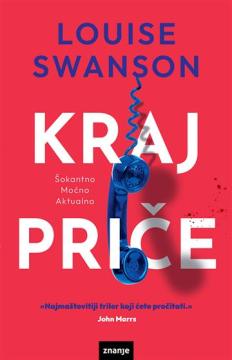
Kraj priče
A powerful, moving, and timely thriller about censorship, art, and the healing power of fiction – perfect for dystopian lovers, but with a personal, intimate touch. Swanson wrote the novel during the pandemic, following a family tragedy.
The year is 2035. In a dystopian world after a global crisis, the government has declared fiction dangerous – fiction is banned, novels are burned or removed from shelves, and writing and reading fictional stories is declared a crime against “truth” and social order. Only “factual” books (scientific, historical, manuals) are allowed. Writers are criminals, their imagination is considered a threat to stability.
The main character is Fern (or a similar pseudonym), a once successful, award-winning bestselling author. After the ban, she lost everything: her career, fame, family (she is a widow), her home. Now she lives in a dilapidated house, works as a hospital cleaner, and hides from the authorities. But Fern cannot stop writing – she secretly writes new novels by hand, in hidden notebooks, because storytelling is her only way to survive grief, isolation, and loss (the novel was written after the author’s family tragedy and the pandemic).
Her life becomes complicated when "supervisors" appear - two agents ("high and low") who follow and interrogate her. Fern becomes suspicious because the authorities suspect that she is still creating "dangerous" fiction. The novel turns into a tense thriller: Fern tries to hide the manuscripts, escape persecution, but also confront her own past - the loss of her husband, guilt, a longing for art.
Through Fern's eyes, Swanson explores the power of story: why does a person need fiction? What happens when society forbids imagination? The novel is a mix of dystopia, psychological thriller and deep meditation on grief, creativity and resistance. Fern's fight is not just for survival - but for preserving humanity through storytelling.
The style is tense, emotional, with elements of claustrophobia and fear of totalitarianism. The book ends with a shocking twist that sheds new light on the whole story, leaving the reader with the question: is this the end of the story - or the end of freedom?
One copy is available