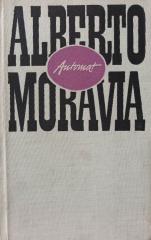
Automat
Zbirka od 41 kratke priče: likovi se ponašaju kao „automati“ – mehanički, letargični, nesposobni za autentičnu reakciju na životne probleme. Savremeni čovek otuđen, zarobljen u rutini, seksu, novcu i pasivnosti, bez volje i osećanja.
Automat je zbirka kratkih priča Alberta Moravije, objavljena 1962–1963. godine, koja sadrži 41 priču (neke su ranije objavljene u novinama). Ovo je Moravijevo najkoncentrisanije istraživanje egzistencijalnog otuđenja i dehumanizacije u savremenom društvu – likovi su „automati“, ljudi koji više ne deluju iz unutrašnje motivacije, već mehanički reaguju na spoljašnje impulse, poput bezdušnih mašina.
Glavna tema je nemogućnost proaktivnog delovanja, pasivnost pred problemima (ljubav, kriza, smrt, seks). Protagonisti su uglavnom muškarci srednje klase, intelektualci ili obični građani – oni posmatraju život iz daljine, bez volje za promenom. Na primer, čovek koji ne može da prekine dosadnu vezu, muž koji toleriše prevaru svoje žene, osoba koja ne može da se suoči sa gubitkom ili oni koji se predaju rutini i fetišima (novac, predmeti, telo) kao zameni za smisao.
Ovde Moravija precizno analizira posleratnu Italiju i Zapad u eri potrošačkog društva: otuđenje od sebe i drugih, seks kao mehanički čin, nemogućnost prave komunikacije, dominaciju objekata nad subjektom (fetiš kao metafora iz naslova). Priče su kratke, suve, introspektivne - često u prvom licu, sa naglaskom na unutrašnjem monologu i apsurdnim situacijama. Nema heroizma niti katarze; završeci su gorki, rezignirani ili cinični.
Ova zbirka nastavlja motive iz Dosade i Rimskih priča, ali dublje zalazi u psihološku i egzistencijalnu krizu - anticipira kasnije teme otuđenja u modernosti (uticaj na postmodernu književnost). Kritičari ističu da Moravija ovde pokazuje „automatizaciju“ ljudskog ponašanja u kapitalističkom društvu: ljudi postaju objekti, bez slobodne volje. Stil je minimalistički, precizan, bez patetike - forma kratke priče savršeno se uklapa sa temom mehaničkog, ponavljajućeg života.
Zbirka se često izdvaja kao jedna od njegovih najradikalnijih zbirki priča. Predstavlja vrhunac Moravijeve „psihološke“ faze 1960-ih, gde se fokus pomera sa društvene kritike na duboku krizu identiteta i značenja kod modernog čoveka.
Two copies are available