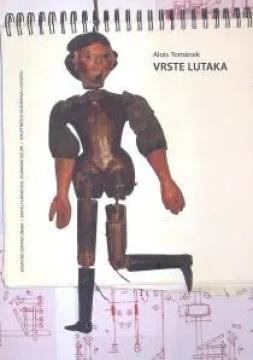
Vrste lutaka

Vrste lutaka

Alois Tomanek

A book about types of puppets in theater

Types of Dolls is a comprehensive work in which the excellent Czech set designer and theater technologist Alois Tománek shows in what forms, situations, and incarnations the doll appears, provides an overview of puppetry techniques, types of dolls, and their stage space, with a series of drawings, blueprints, and specific instructions, all based on his own many years of experience as well as on professional literature and the works of his colleagues.

There are many different types of dolls that have been developed throughout history and are used for various purposes, such as toys, works of art, educational tools, or as collectibles. Here are a few examples of different types of dolls:

  1. Toys for play and entertainment:
  • Fashion dolls: Dolls that represent characters, usually female, with an emphasis on fashion and clothing.

  • Barbie dolls: A type of fashion doll introduced by Mattel and that has become very popular.

Action Figures: Dolls depicting characters from movies, comics, or video games and used for action and adventure play.

  • Stuffed Dolls: Soft and cuddly dolls usually filled with cotton or other materials.
  • Wooden Dolls: Handcrafted wooden dolls used for play and storytelling. 2.Art Dolls:
  • Marionettes: Movable dolls that are tied to strings or wires and controlled by a puppeteer.
  • Porcelain Dolls: Handcrafted porcelain dolls that are often artistically crafted and are often collectibles.
  • Puppets: Traditional dolls with folkloric and cultural characteristics, often used for dance and performance. 3.Educational Dolls:
  • Medical Dolls: Dolls used in medical training to simulate various medical situations.
  • Educational Dolls: Dolls used for educational purposes to encourage learning and skill development in children.
  1. Collector's dolls:
  • Antique dolls: Dolls that are older and have become valuable as collectibles.
  • Reborn dolls: Artistically made dolls that look very realistic and are often used for collectors.

Original title
Podoby loutky
Translation
Katica Ivanković
Editor
Livija Kroflin
Illustrations
Alois Tomanek
Graphics design
Alois Tomanek
Dimensions
21 x 14.5 cm
Pages
156
Publisher
Matica hrvatska, Osijek, 2018.
 
Latin alphabet. Paperback.
Language: Croatian.

Multiple copies are available

Copy number 1

Condition:Used, excellent condition

Copy number 2

Condition:Used, excellent condition

Copy number 3

Condition:Used, excellent condition

Copy number 4

Condition:Used, excellent condition
 

Are you interested in another book? You can search the offer using our search engine or browse books by category.

You may also be interested in these titles

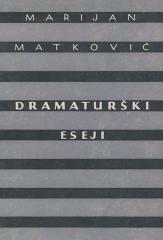
Dramaturški eseji

Dramaturški eseji

Marijan Matković

"Dramaturgical Essays" by Marijan Matković, published in 1949, is a collection of essays that focuses on Croatian and European dramatic literature.

Matica hrvatska, 1949.
Croatian. Latin alphabet. Hardcover.
4.58
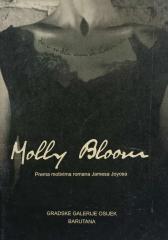
Molly Bloom (o ljubavi, seksu i usamljenosti)

Molly Bloom (o ljubavi, seksu i usamljenosti)

Marijana Fumić

The play was based on the 18th chapter of the novel Ulysses by James Joyce.

Gradske galerije, 2009.
Croatian. Latin alphabet. Paperback.
2.24
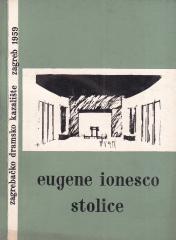
Stolice

Stolice

Eugene Ionesco

"Chairs" is a one-act play by Eugène Ionesco, one of the most significant representatives of the theater of the absurd, premiered in 1952. This edition was printed on the occasion of the play's premiere at the Zagreb Drama Theater in 1958.

Zagrebačko dramsko kazalište, 1959.
Croatian. Latin alphabet. Paperback.
7.26
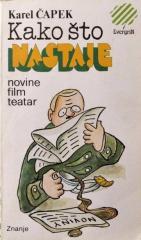
Kako što nastaje: novine, film, teatar

Kako što nastaje: novine, film, teatar

Karel Čapek

In a witty and instructive essay, Čapek describes how a newspaper, a film, and a theater play are created. Through humor and irony, he shows the complexity of the process – from idea to realization – and the different perspectives of the participants, dem

Znanje, 1985.
Croatian. Latin alphabet. Paperback.
4.76
Govorna interpretacija umjetničkoga teksta

Govorna interpretacija umjetničkoga teksta

Novak Novaković

The spoken interpretation of an artistic text arises from the individual's desire to verbally shape the text of an artistic character in an artistic way as his own experience. This handbook of interpretive reading and recitation will help with that.

Školska knjiga, 1980.
Croatian. Latin alphabet. Hardcover.
6.62