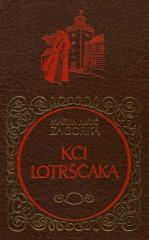
Kći Lotrščaka

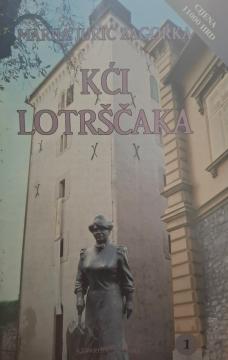
Kći Lotrščaka

Marija Jurić Zagorka

In addition to the love story, which is the backbone of almost all of Zagorka's works, "The Daughter of Lotrščak" is a novel that is unique in that it abounds in numerous legends and folk tales related to Zagreb, based on supernatural and religious motifs

The novel tells the story of the painting of Our Lady of Stone, which becomes a sacred symbol of Zagreb after remaining intact in a fire that destroyed everything, including the frame itself. The valuable painting protects the main character, the golden-haired Manduša, from all the evils and troubles that accompany her in the novel.

Dimensions
20 x 13 cm
Pages
64
Publisher
Katarina Zrinska, Zagreb
 
Latin alphabet. Paperback.
Language: Croatian.

One copy is available

Condition:Used, excellent condition
 

Are you interested in another book? You can search the offer using our search engine or browse books by category.

You may also be interested in these titles

Gordana III: Pakao prijestolja

Gordana III: Pakao prijestolja

Marija Jurić Zagorka
Stvarnost, 1966.
Croatian. Latin alphabet. Hardcover.
8.525.96
Gordana VI: Veliki sud

Gordana VI: Veliki sud

Marija Jurić Zagorka
Stvarnost, 1966.
Croatian. Latin alphabet. Hardcover.
8.345.84
Vitez slavonske ravni

Vitez slavonske ravni

Marija Jurić Zagorka
August Cesarec, 1986.
Croatian. Latin alphabet. Paperback.
2.98
Knjiga moga oca

Knjiga moga oca

Ethem Mandić

This is a biography about my father made up of memories and mere imagination. History does not exist, and neither do facts. The past is unknown.

OKF d.o.o, 2016.
Croatian. Latin alphabet. Paperback.
10.64
Ljubičice u srijedu

Ljubičice u srijedu

Andre Maurois

André Maurois, a French writer known for his psychological novels and biographies, explores themes of family relationships, love, and internal conflicts in this work, which is characteristic of his style.

Svjetlost, 1965.
Croatian. Latin alphabet. Paperback.
3.42 - 3.62
Deobe 1-3

Deobe 1-3

Dobrica Ćosić

This work, awarded the NIN Prize for that year, is considered one of the most significant in Serbian literature after World War II.

Prosveta, 1961.
Serbian. Cyrillic alphabet. Hardcover with dust jacket.
The book consists of 3 volumes
11.42