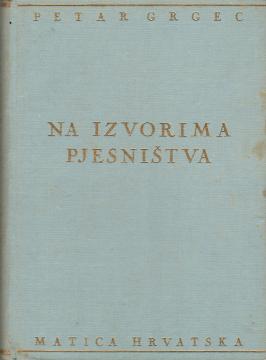
Na izvorima pjesništva
Antique

Na izvorima pjesništva

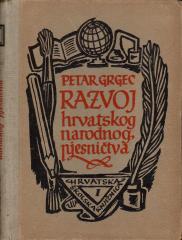
Petar Grgec

The book systematically explores the fundamental spiritual, cultural, and aesthetic sources of poetry. Through consideration of motifs, tradition, language, religion, and worldview, Grgec shows how poetic expression and experience are shaped.

On the Sources of Poetry by Petar Grgec is a broadly conceived work that seeks to explain the deep roots and inner drivers of poetic creation. The author begins by elaborating on the poet's way of creating, reflecting on how inspiration is transformed into a formed word. This is followed by an analysis of the cultural strands of poetic expression, where Grgec shows that poetry never appears in a vacuum, but in dialogue with tradition, language and spiritual heritage.

A special section is dedicated to the development of poetic knowledge, i.e. the question of how a poet is shaped through learning, experience and encounter with literary heritage. Grgec then explores folk and ancient sources, comparing the motifs and techniques of Homeric poetry with Croatian folk tradition and emphasizing their role in forming the European lyrical horizon. He also analyzes biblical texts, especially Song of Songs, highlighting the strong symbolism and spiritual depth that have inspired poets for centuries.

In the chapters on the relationship between poetry and life, the author considers how personal reality, work, and social circumstances shape the poet's voice. He develops the idea that poetic creation is not an escape from the world, but its deepened reflection. He also speaks of dream, as a particularly fertile space for poetic imagination, and of the moment of poetic experience, that brief flash of inspiration from which a poem emerges.

A significant part of the book is devoted to issues of literature and worldview, nationality, and the value and symbolic power of works such as Mihanović's "Croatian Homeland". In the appendix, Grgec analyzes folk songs as an inexhaustible source of motifs, rhythms, and lyrical sensibility.

The work is thoughtful, rich in insights, and written in a clear and humanistic style, which is why it represents a valuable guide through the spiritual sources and inner dynamics of poetry.

Dimensions
21 x 16 cm
Pages
176
Publisher
Matica hrvatska, Zagreb, 1940.
 
Latin alphabet. Hardcover.
Language: Croatian.

One copy is available

Condition:Used, excellent condition
 

Are you interested in another book? You can search the offer using our search engine or browse books by category.

You may also be interested in these titles

Mrka kapa

Mrka kapa

Aristid Teofanović

Mrka kapa is a book of short prose written under the pseudonym Aristid Teofanović, used by Slobodan Blagojević. Blagojević is also known by the heteronym Anhel Antonić (poetry) and other works under his real name.

Feral Tribune, 2001.
Croatian. Latin alphabet. Paperback.
9.36
Historijska čitanka 2

Historijska čitanka 2

Miljenko Jergović

The first edition of the second part of the series with 5 new (bonus) stories by a famous writer and journalist. "This book completes the 'Historical Reader', a project - a column started on the pages of the Sarajevo magazine Dani, shortly after the end o

Durieux, 2004.
Croatian. Latin alphabet. Hardcover.
7.32
Dnevnici, 1. svezak: 1909-1912.

Dnevnici, 1. svezak: 1909-1912.

Franz Kafka

Kafka's diaries, published posthumously, reveal the inner world of an anxious genius. The first volume covers his early years, when Kafka worked as an insurance clerk in Prague, faced with a dreary life and literary ambitions.

Tim press, 2022.
Croatian. Latin alphabet. Paperback.
15.42
Tu nema ničega!

Tu nema ničega!

Dubravka Ugrešić

In her provocative essay, Dubravka Ugrešić considers life in post-socialist Europe and Croatia using the example of spas.

Multimedijalni institut, 2020.
Croatian. Latin alphabet. Paperback.
13.58
Primicanje katastrofa: Propasti koje prijete našem svijetu

Primicanje katastrofa: Propasti koje prijete našem svijetu

Isaac Asimov

A popular science work in which Asimov, combining scientific rigor with a lucid style, explores possible threats to the survival of humanity, systematizing disasters according to their nature and probability.

August Cesarec, 1981.
Croatian. Latin alphabet. Hardcover with dust jacket.
7.46
Sol, ovce i kamenje

Sol, ovce i kamenje

Magdaléna Platzová

A fresh, uninhibited literary view of Dalmatia. Four stories about Dalmatia told in the manner of the best pages of Czech literature. Bringing to life the scents of salt and sea, the author writes vivid prose full of color and flavor.

Fraktura, 2006.
Croatian. Latin alphabet. Paperback.
8.54