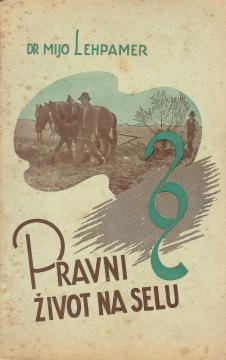
Pravni život na selu
In a popular booklet, Dr. Mijo Lehpamer explains the basics of legal life in the countryside – property, contracts, debts, inheritance, litigation, and the everyday legal problems of farmers in an understandable way.
Dr. Mijo Lehpamer (Nova Gradiška, 1903 – Zagreb, 1978), a lawyer, judge and Catholic activist, wrote the booklet Pravni život na selo as a practical lesson for the peasant population. The book belongs to a series of popular-law publications intended for a wide audience, especially peasants. Lehpamer, who worked as a judge in several places (including Đurđevac and Pregrada), was well acquainted with the problems of the rural population – over-indebtedness, land disputes, lifelong maintenance contracts, inheritance and land registry entries. The work is written in clear, simple language, without unnecessary legal terminology, so that the peasant could understand it and use it in everyday life.
The main topics include:
- the basics of ownership relations in the countryside
- contracts (sale, lease, lifelong maintenance)
- liquidation of peasant debts
- inheritance and division of property
- civil proceedings and the peasant before the court
- legal consequences of failure to comply with deadlines and regulations
Lehpamer wrote this booklet in the context of the great economic problems of the Croatian countryside between the two world wars – massive indebtedness, agrarian crisis and the need for legal protection of peasants. His later book The Peasant Before the Court (1941/1942) had a similar purpose.
The work had a practical and educational purpose: to raise the legal awareness of the peasantry, prevent unnecessary disputes and help peasants to better protect their rights. The style is popular, instructive and engaging, typical of the publications of St. Jerome, which spread the Enlightenment and Catholic social teaching among the people.
Today, the book is an antiquarian rarity, sought after among collectors of legal literature and regional history. It represents an important document on the socio-economic conditions of the Croatian countryside on the eve of World War II.
One copy is available