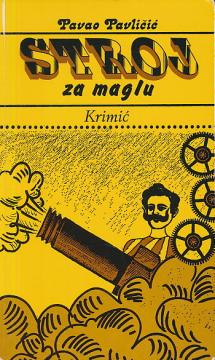
Stroj za maglu
The crime novel follows an investigator as he uncovers a crime in a small town through the fog of secrets and political intrigue, where real motives are hidden behind false images and deliberately created illusions.
"The Fog Machine" (1978) is one of Pavo Pavličić’s striking crime novels, in which the author masterfully blends a tense investigation, a distinctive local setting, and layered imagery. The plot unfolds in a small town and begins with a murder that initially appears to be an ordinary local crime. However, as the investigation progresses, it is revealed that the motives and circumstances surrounding the event are far more complex and dangerous than they first seemed. The novel’s central motif—"the fog machine"—serves as both a functional and symbolic metaphor for the systematic concealment of truth, the spread of disinformation, and the creation of illusions within the social and political community. The investigator contends not only with time constraints and physical evidence but also with a web of vested interests, tacit agreements, and red herrings deliberately planted by influential figures to mask their own culpability. Pavličić skillfully builds suspense and a dark atmosphere steeped in a sense of uncertainty and mistrust. Through its exploration of guilt, power, and manipulation, "The Fog Machine" transcends the conventions of the detective genre, standing as a powerful study of the mechanisms of social deception and the arduous path to uncovering the truth.
One copy is available