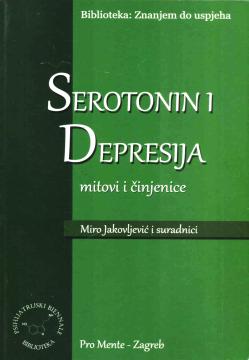
Serotonin i depresija: mitovi i činjenice
The paper analyzes the complex role of serotonin in the pathophysiology of depression, highlighting that depression is not merely a simple serotonin deficit, but rather a disorder of complex neurobiological and neuroplastic networks.
A 2013 professional paper by Prof. Miro Jakovljević, MD, PhD, titled "Serotonin and Depression," re-examines the classic serotonin hypothesis that dominated psychiatric science and practice for decades. The author emphasizes that the modern understanding of depression extends beyond the simplistic notion of a "chemical imbalance" or a mere serotonin deficiency in the brain. In this paper, serotonin (5-HT) is presented as a key neuromodulator involved in the regulation of mood, sleep, appetite, cognitive functions, and stress responses. The paper details the complexity of the serotonergic system, including various receptor types and subtypes and their interactions with other neurotransmitter systems (such as the dopaminergic and noradrenergic systems). Special focus is placed on the mechanisms of action of selective serotonin reuptake inhibitors (SSRIs) and other antidepressants, explaining why therapeutic effects are delayed during the initial weeks of treatment despite an immediate rise in synaptic serotonin levels. The author concludes that depression is a heterogeneous disorder rooted in changes to neuroplasticity, synaptic remodeling, and the expression of neurotrophic factors (such as BDNF). Serotonin acts as a vital link enabling the adaptation and recovery of brain circuits; thus, the paper offers an integrative insight into modern psychopharmacology and a personalized approach to treating depressive disorders.
One copy is available