Vreme sporta i razonode: Titina Hrvatska i njeni Srbi, 1951.-1971.
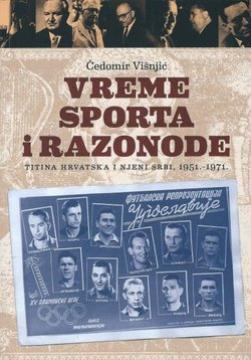
Čedomir Višnjić’s book analyzes the position of Serbs in Croatia (1951–1971) through the lens of everyday life, culture, and the media, and examines the Serbian community's reactions to the Croatian Spring.
The monograph The Era of Sport and Leisure: Tito’s Croatia and Its Serbs, 1951–1971, by the prominent historian and publicist Čedomir Višnjić, presents an in-depth and innovative study of one of the most dynamic periods in socialist Yugoslavia. Moving beyond high politics, the author focuses on everyday life, mass culture, sport, entertainment, the press, and cultural activities, analyzing how Serbs in Croatia positioned themselves and evolved within this context.
The book covers twenty pivotal years of post-war reconstruction—spanning the stabilization period following the conflict with the Informbiro, through economic and social reforms, to the turbulent prelude to the Croatian Spring in the early 1970s. Višnjić dissects how national identities were redefined through institutions, cultural societies (such as Prosvjeta), the education system, and the media, and examines the impact of modernization and urbanization on the Serb community in both urban centers and traditional regions like Kordun, Banija, Lika, and Dalmatia.
A particular strength of the work lies in its wealth of archival material, newspaper articles, photographs, and documents that capture the spirit of the times. The author skillfully balances collective history with intimate portraits of the society of that era, offering readers a multi-layered insight into processes of emancipation as well as the hidden tensions underlying the ideal of "brotherhood and unity." This book is essential reading for anyone wishing to understand the complex inter-ethnic relations and social dynamics of Croatia in the second half of the 20th century.
One copy is available