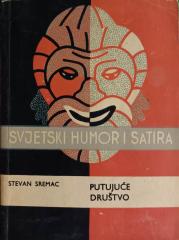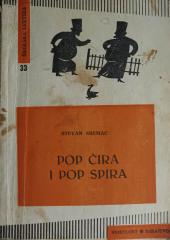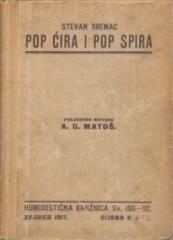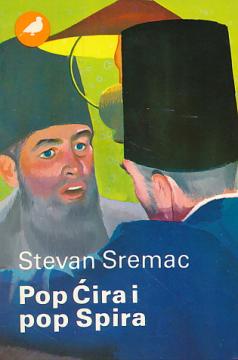
Pop Ćira i pop Spira
Two priests, Ćira and Spira, live in friendship until the arrival of a young teacher, Pera, who arouses the envy of the priests who want him as their son-in-law. The friendship falls apart, until the trial before the bishop. A humorous satire of life in V
Pop Ćira and Pop Spira (1898) is the most popular and funniest novel by Stevan Sremac, a classic of Serbian humorous literature. Inspired by a real anecdote (a quarrel between two priests and a knocked-out tooth), the novel depicts the Vojvodina environment at the end of the 19th century – a wealthy Banat village (“it’s not a village, but a small town”) where the peasants love the church and the priests so much that they support two of them.
The main characters are two priests:
- Pop Ćira (aka Pop Hala) – more cheerful, voracious, optimistic.
- Pop Spira (aka Pop Kesa) – a little stingier, but also a hedonist in life.
Both have sons (Persa and Sid) and daughters (Mara and Jela), and live in harmony: they visit each other every day, drink brandy, eat, gossip. The idyll is shattered by the arrival of the young, handsome teacher Pero Petrović. His wife immediately "obliged" him - each of them wants him to become her son-in-law and marry her daughter. Subtle pranks, gossip, and ridicule of each other begin ("my sweet" on the outside, and poison on the inside). Envy turns into open arguments, and even a physical confrontation between the pops - a fight in which one knocks out the other's tooth.
The novel culminates in a trial before the bishop, where everything is resolved in a funny way, with a lot of folk wisdom and humor. Sremac uses a lively, dialectal language full of proverbs, witticisms and irony, dissecting petty-bourgeois mentality, hypocrisy, envy, vanity and superficial friendship in a patriarchal society.
A satire on "Kalman" life in Vojvodina - where everything revolves around food, drink, marriage and status, and the church and priests are the center of everything. The work is full of warmth towards the characters, but also sharp criticism of the petty bourgeoisie. It remains relevant because it deals with universal human frailties: how easily friendships fall apart because of petty interests.
One copy is available