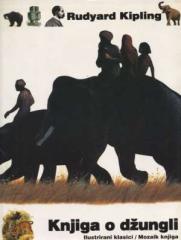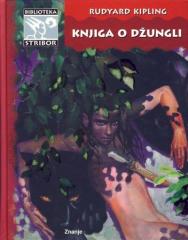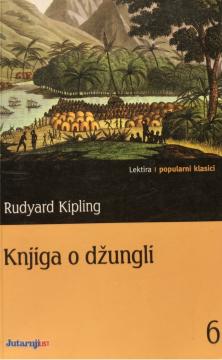
Knjiga o džungli
Mowgli, a boy raised by wolves in the Indian jungle, learns the Law of the Jungle alongside Baloo, Bagheera and other animals. He battles Shere Khan and discovers his human identity. A classic about nature, friendship and growing up.
The Jungle Book (1894) is one of the most famous and beloved works of children's literature, but also a deeply layered work for adults. It is a collection of stories (not a single novel) set in the Indian jungle during the British colonial rule.
The most famous part of the collection consists of the stories of Mowgli, an Indian boy who loses his parents and is adopted by a pack of wolves. Under the guidance of the wise panther Bagheera and the bear Baloo, Mowgli learns the Law of the Jungle – strict rules that ensure survival and order in the wilderness. Along with them are the python Kaa, the brave wolf Akela, and the main enemy – the man-eating tiger Shere Khan.
Kipling masterfully depicts the jungle as a living, strict, but just world where everyone has their place. Mowgli grows up as a "foal-man", learns the languages of animals, faces dangers and in the end must choose whether to stay in the jungle or return to the people.
In addition to Mowgli's stories, the collection also includes other famous stories such as Rikki-Tikki-Tavi (about a brave mongoose who fights cobras), The White Seal (about a seal seeking a safe place for his people) and Toomai of elephants. All the stories celebrate courage, loyalty, friendship and respect for nature.
Kipling's style is rich, rhythmic and full of exotic details. The novel reflects the author's deep knowledge of India, but also a colonial worldview – the jungle is depicted as a place of wilderness that needs to be understood and respected, not just conquered. The Law of the Jungle is often interpreted as a metaphor for social order and imperial values.
The Jungle Book has become a world classic, inspiring numerous films (the most famous being Disney's in 1967), cartoon series and stage adaptations. For this and other works, Kipling was awarded the Nobel Prize for Literature in 1907. Even today, he captivates readers with the power of storytelling and his romantic depiction of the Indian jungle as a magical, dangerous, and wise world.
Multiple copies are available
Copy number 4
- Traces of patina