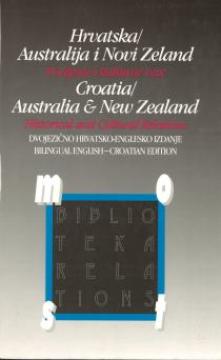
Hrvatska / Australija i Novi Zeland : Povijesni i kulturni odnosi
One copy is available

One copy is available
Are you interested in another book? You can search the offer using our search engine or browse books by category.
In the book before you, Jan Patočka wrote a paradigmatic essay on the Central European identity of a Slavic people.
The book describes how the Western Balkans, after initial democratic hopes in the 2000s, slipped into competitive authoritarianism. It explains the mechanisms of "strongman" rule, the role of EU stabilocracy and why democracy does not consolidate.
The author explores why Tito remains a popular symbol of stability, social security and independence, despite critical views of his regime. The book maps the cultural, political and everyday manifestations of "Titostalgia".
Zdenka Lechner, the first ethnologist at the Museum of Slavonia (1951–1965), made significant contributions to the study of the traditional culture of Slavonia, including the use of pokljuc – earthen lids for baking bread and pastries on the hearth.
In the book, Todorov examines the relationship between the production of discourse (rhetoric) and its interpretation (hermeneutics), focusing on verbal symbolism – the phenomenon of indirect meaning that builds on direct, literal meaning.
The collection Essays and Articles by Ljubo Karaman, an eminent art historian, includes a series of texts on Croatian art, with an emphasis on the medieval heritage of Dalmatia and its connection with European cultural movements.