Kronika: Splitski rukopis
Rare book

Kronika: Splitski rukopis

Toma Arhiđakon

"Historia Salonitana: The History of the Salonitan and Split Archpriests" by Thomas the Archdeacon is the most important historiographical source for Croatian medieval history. The work contains the history of the Split (Salonian) church until 1266, when

Thomas (ca. 1200–1268), born in Split into a noble family, archdeacon of the Split metropolis, lawyer from Bologna and diplomat, wrote the work around 1266 in Latin, basing it on the earlier “Chronicle” of Ivan Ravnijan and his own memories.

The chronicle, divided into three books, traces the development of the Split church: from the apostolic roots and the martyrdom of St. Duje (1st century), the fall of Salona under the Avars (7th century), the arrival of the Croats as allies of the Byzantine emperor Heraclius ("The Croats... armed with bows and arrows, came from the island of Choryo in Pontus Euxinus, where they lived as neighbors of the Turcopolos"), the Croatian kingdom under the Trpimirovićs, to the conflict with the Hungarians, Venice and internal church struggles in the 13th century. Thomas, as a witness to the Mongol threat in 1241, describes political intrigues, the struggle for metropolitan autonomy and the role of Split as the cultural center of Dalmatia.

The work is not just a chronicle, but a sophisticated narrative with a rhetorical style, myths (e.g. about the Croatian origin from the son of Noah) and criticism of Hungarian hegemony, establishing Croatian identity in a European context. Quote: "This gens [Croats] was cruel to its enemies, but gentle and faithful to its friends."

Influenced later historians (Klaić, Goldstein), translated into English (1999), crucial for understanding medieval Dalmatia as a bridge between East and West. As a masterpiece of Latin prose, it symbolizes intellectual resistance to oblivion: history as the living voice of the people.

Original title
Historia Salonitanorum pontificum atque Spalatensium
Translation
Vladimir Rismondo
Editor
Cvito Fisković
Dimensions
19.5 x 13 cm
Pages
426
Publisher
Čakavski sabor, Žminj, 1977.
 
Latin alphabet. Hardcover with dust jacket.
Language: Croatian.

One copy is available

Condition:Used, excellent condition
Damages or inconvenience notice:
  • Slight damage to the dust jacket
 

Are you interested in another book? You can search the offer using our search engine or browse books by category.

You may also be interested in these titles

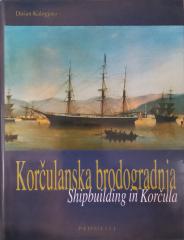
Korčulanska brodogradnja / Shipbuilding in Korčula

Korčulanska brodogradnja / Shipbuilding in Korčula

Dušan Kalogjera

The monograph Korčula Shipbuilding by Dušan Kalogjera explores the rich history of shipbuilding on the island of Korčula, a key center of Adriatic maritime tradition from the Middle Ages to the present day.

Prometej, 1998.
Croatian. Latin alphabet. Hardcover with dust jacket.
87.32
Na vratima Požeške doline

Na vratima Požeške doline

Dragutin Pavličević

A classic of local historiography, it depicts the history, geography and culture of the Požega Valley from prehistoric times to the modern era. The work describes the region's strategic position, the influences of the Romans, Ottomans and Habsburgs, with

Matica hrvatska, 1961.
Croatian. Latin alphabet. Paperback.
12.36
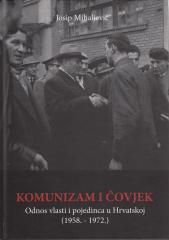
Komunizam i čovjek: Odnos vlasti i pojedinca u Hrvatskoj (1958.–1972.)

Komunizam i čovjek: Odnos vlasti i pojedinca u Hrvatskoj (1958.–1972.)

Josip Mihaljević

Josip Mihaljević's book analyzes the relationship between the government and the individual in communist Croatia (1958–1972), through repressive mechanisms, ideological pressures, and restrictions on personal freedom in the socialist system.

Hrvatski institut za povijest, 2016.
Croatian. Latin alphabet. Hardcover.
17.26
Kronika o glazbenoj i dramskoj djelatnosti u Belišću 1890.-1990.

Kronika o glazbenoj i dramskoj djelatnosti u Belišću 1890.-1990.

Dragutin Gibičar
Gradsko poglavarstvo, 2008.
Croatian. Latin alphabet. Paperback.
9.98
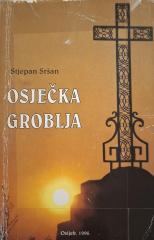
Osječka groblja

Osječka groblja

Stjepan Sršan

The book is deeply rooted in the local history and culture of Osijek, with an emphasis on cemetery motifs that serve as a metaphor for memory, death, and disappearance.

Povijesni arhiv u Osijeku, 1996.
Croatian. Latin alphabet. Paperback.
5.26
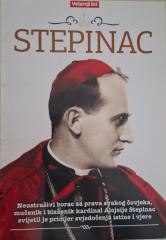
Stepinac

Stepinac

Zvonimir Despot, Jadranka Jureško-Kero, Darko Pavičić, Ljiljana Risek, Silvije Tomašević
Večernji list, 2012.
Croatian. Latin alphabet. Paperback.
8.565.99 - 9.38