Contemporary philosophy • History of Philosophy
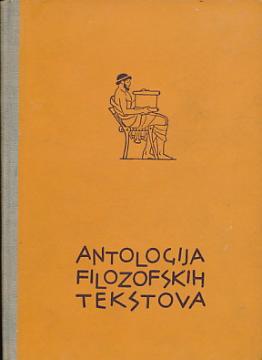
Antologija filozofskih tekstova s pregledom povijesti filozofije
Branko Bošnjak, Vladimir Filipović, Milan Kangrga, Đorđe Mažuran, Gajo Petrović, Vanja Sutlić, Predrag Vranicki
This book is intended for secondary school students as an auxiliary manual. But also to everyone else who wants to become familiar with the main questions from the history of philosophy.
The book contains characteristic passages from the works of the most important thinkers of the past.
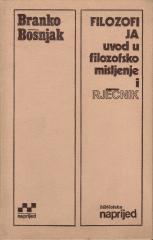
Philosophy: Introduction to Philosophical Thought and Vocabulary is a classic Croatian university textbook that introduces the reader to the foundations of philosophy and its terminology in a clear and systematic manner.
Naprijed, 1977.
Croatian. Latin alphabet. Hardcover.
9.46 €
Political philosophy • Contemporary philosophy • Autobiographies and Memoirs • Interviews
A book of interviews in which Kołakowski retrospectively describes his life and intellectual journey through the turbulent 20th century – from pre-war Poland, through Nazi occupation, Stalinism, revisionist Marxism, to exile in the West.
Critchley's book explores the philosophical and psychoanalytic meaning of laughter, positioning humor as a fundamental human survival mechanism with which we confront the anxiety and absurdity of everyday life.
In this provocative essay, Sloterdijk intervenes in the heated debate of the 1980s about modernism and postmodernism. A short, sharp text – essential for understanding Sloterdijk's early approach to aesthetics, media and the crisis of modernity.
Svetovi, 1988.
Serbian. Latin alphabet. Paperback with dust jacket.
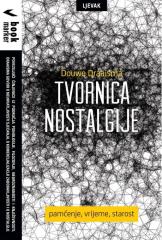
In this provocative and interdisciplinary book, the author shows that emotions are not universal biological constants, but change across time, cultures, and social contexts – and they are precisely those that are crucial in shaping the history of humanity
Školska knjiga, 2023.
Croatian. Latin alphabet. Hardcover with dust jacket.
21.36 €
Political philosophy • Contemporary philosophy • Collections and chronologies
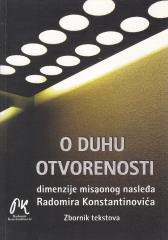
The collection is an important contribution to the revitalization of Konstantinović's thought in the post-Yugoslav space, demonstrating that his critique of the rural mind remains relevant for understanding contemporary social and political pathologies.