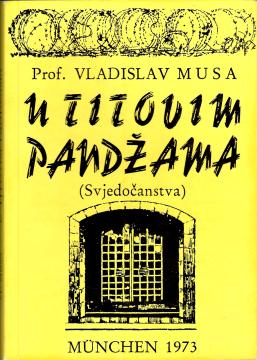
U Titovim pandžama (Svjedočanstva)
The content of the book is real and experienced in the enslaved homeland, in the dictatorship and Tito's prisons.
Jedan primerak je u ponudi

The content of the book is real and experienced in the enslaved homeland, in the dictatorship and Tito's prisons.
Jedan primerak je u ponudi
Zanima Vas i neka druga knjiga? Možete pretražiti našu ponudu pomoću pretrage ili prelistati knjige po kategorijama.
The book presents a comprehensive overview of the economic development of Osijek over eight centuries. The work is based on historical sources and scientific analyses, providing insight into economic conditions from the Middle Ages to the modern era.
Eine lokale Feuilletonchronik von Slavonski Brod von der Römerzeit (Marsunija) über die türkische Herrschaft, die Militärgrenze und die Festung bis ins 19./20. Jahrhundert. Ein warmherziger, nostalgischer Bericht über die Geschichte, die Bräuche und die S
Zdenka Lechner, the first ethnologist at the Museum of Slavonia (1951–1965), made significant contributions to the study of the traditional culture of Slavonia, including the use of pokljuc – earthen lids for baking bread and pastries on the hearth.
The collection Essays and Articles by Ljubo Karaman, an eminent art historian, includes a series of texts on Croatian art, with an emphasis on the medieval heritage of Dalmatia and its connection with European cultural movements.
Josip Mihaljević's book analyzes the relationship between the government and the individual in communist Croatia (1958–1972), through repressive mechanisms, ideological pressures, and restrictions on personal freedom in the socialist system.
Journalist Milan Ivkošić said that the book contains texts by authors who differ ideologically and that some of them do not share Glavaš's views, but, as he maintains, wrote objectively about his case.