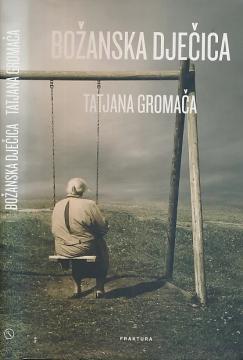
Božanska dječica

Božanska dječica

Tatjana Gromača

And in her latest book, Divine Children, Gromača is decisive, personally open, without pandering to anyone.

Mental illness and dealing with it unfold before the reader on all levels, from external to intimate. Tatjana Gromača is a stylistic perfectionist whose sentences always precisely hit the core of the problem. The novel Divine Children demands an attentive reader, ready to face their own traumas. Cathartic and powerful, these prose fragments form a unique novelistic whole in which, through the fate of one woman, all the most hidden traumas of a society unwilling to accept anything different are refracted and resolved. Tatjana Gromača's prose has the properties of primordial elements; it is devoid of any embellishment, any superfluous additions, it is stripped down to the bare essentials, which is why when reading it we feel the power of Greek tragedies. Tatjana Gromača is the most eminent writer of new Croatian prose, because she is incorruptible, sharp and so bitter. Gromača stands out for its precious roughness, there is almost no other phenomenon of this type in our country, which is devoid of any sweetness, and the almost obligatory youthful triumphalism. She has nothing to be happy about, living in familiar situations and difficult general circumstances, but she can be proud because she knows that. Her latest prose is a tiny masterpiece.

Editor
Seid Serdarević
Dimensions
21 x 13.5 cm
Pages
179
Publisher
Fraktura, Zaprešić, 2012.
 
Latin alphabet. Hardcover with dust jacket.
Language: Croatian.

One copy is available

Condition:Used, excellent condition
 

Are you interested in another book? You can search the offer using our search engine or browse books by category.

You may also be interested in these titles

Berlin, Pula, Varšava

Berlin, Pula, Varšava

Tatjana Gromača
Sandorf, 2022.
Croatian. Latin alphabet. Hardcover.
12.98
Sva jutra ovoga svijeta

Sva jutra ovoga svijeta

Pascal Quignard
Naklada Pelago, 2004.
Croatian. Latin alphabet. Paperback.
10.38
Kroz pustinju i prašumu

Kroz pustinju i prašumu

Henryk Sienkiewicz

The novel takes place in the 19th century, and tells the story of two young friends, the fourteen-year-old Pole Stanislaw and his eight-year-old friend Nel from England, who were kidnapped in Sudan by the rebels of the Muslim priest Mahdi.

Branko Đonović, 1963.
Serbian. Latin alphabet. Hardcover.
4.62 - 4.88
Tragom mrtve princeze

Tragom mrtve princeze

Kenizé Mourad

Kenize Murad, granddaughter of the Turkish Sultan Murad, was born in Paris and writes in French. She achieved world fame in the late 1980s with this novel.

Znanje, 1989.
Croatian. Latin alphabet. Hardcover with dust jacket.
2.98
Konjički gambit

Konjički gambit

William Faulkner

‘It was never just a game that reflected all human passion and hope and madness, and then it came true.’ ‘Okay,’ said the young man, ‘don’t say you weren’t warned.’

Izdavački zavod Jugoslavija, 1967.
Serbian. Latin alphabet. Paperback.
4.98
Proneveraši

Proneveraši

Valentin Katajev
Svjetlost, 1964.
Croatian. Latin alphabet. Paperback.
3.34 - 3.42