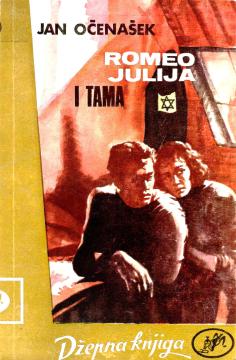
Romeo, Julija i tama
In occupied Prague in 1942, the student Pavel hides the wounded Jewish woman Hana. In danger and fear, a strong love is born between them. The Gestapo discovers them, Pavel dies tortured under investigation, and Hana survives the Holocaust carrying the me
“Romeo, Juliet and the Darkness” (1956) by Jana Otčenáška is a powerful Czech novel about love in the darkest days of the Nazi occupation. The story takes place in Prague in 1942, after Heydrich’s assassination and the imposition of a state of emergency.
Pavel, a student and member of the anti-fascist resistance, is assigned to hide Hana, a young Jewish woman who has escaped from a transport to a death camp, for several days. In a small attic apartment, under the constant threat of the Gestapo, raids and denunciations from neighbors, a deep emotional and loving bond grows between the two.
In conditions where every day may be the last, they share fear, hunger, poetry and tender moments that become their only refuge. Otčenášek subtly depicts how, in extreme circumstances, an intense closeness and a sense of meaning in life are born.
Tragedy strikes when the Gestapo, after receiving a tip-off, raid the apartment. Pavel tries to protect Hana, is captured and tortured, but betrays no one. He dies in prison. Hana is deported, survives the war and bears the scar of that short but crucial love for the rest of her life.
The novel stands out for its realistic depiction of everyday life under occupation, its psychological depth and its restrained, almost documentary style. Without pathos, it powerfully conveys an anti-war and humanist message. It is one of the most important literary testimonies of Czech resistance and humanity during the Holocaust.
One copy is available