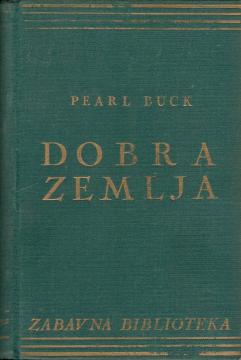
Dobra zemlja
Pearl S. Buck depicts the life of Chinese peasant Wang Lung, his rise from poverty to wealth, and the disintegration of family ties. The novel explores the relationship between man and land, tradition, social change, and moral challenges.
The Good Earth by Pearl S. Buck is one of the most famous novels of the 20th century and a seminal work by the author who brought the Chinese rural world closer to millions of Western readers. The plot follows the life of Wang Lung, a humble Chinese peasant who marries a maidservant named O-Lan, a woman of modest, quiet, but extremely strong character. At the heart of the novel is man’s relationship with the land—the land that provides food, security, identity, and a sense of belonging, but also the land that can withhold everything in times of drought, flood, or famine.
Wang Lung’s rise begins with hard work; through years of sacrifice, thrift, and perseverance, his family rises from poverty to wealth. But along with material progress, moral tension also develops: wealth brings changes in behavior, a growth in vanity, a departure from O-Lan and traditional values, as well as divisions among children who increasingly understand their father’s connection to the land. Buck shows how economic and social changes undermine family unity, and modernization destroys centuries-old patterns of life.
The novel's greatest strength lies in its portrayal of O-Lan, one of the most tragic and silent heroines in world literature. Her sacrifice and modesty carry her family, even as she herself remains in the shadow of her husband's ambition. Through her, Buck subtly points to the position of women in traditional Chinese society.
The Good Earth is not only a family saga but also a profound meditation on the cycles of nature, human gratitude, greed, and the impermanence of happiness. The novel remains relevant because of its universal theme: man can rise, but if he loses touch with his roots, he will lose what is most valuable.
Jedan primerak je u ponudi