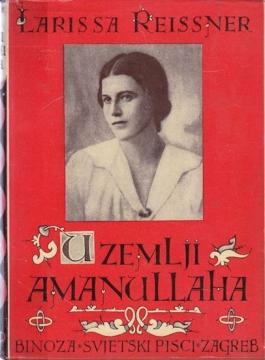
U zemlji Amanullaha
Ein lebendiger Bericht über die Reise des Autors nach Afghanistan in den Jahren 1921-1922, ein Land in einer turbulenten Phase der Modernisierung unter dem reformorientierten König Amanullah Khan, über den Zusammenprall von Tradition und neuer Zeit sowie
Larissa Reissner (1895–1926), die legendäre russische Revolutionärin, bolschewistische Kommissarin, Journalistin und Schriftstellerin, verfasste das Buch Im Lande Amanullahs nach ihrem Aufenthalt in Kabul in den Jahren 1921–1922 mit ihrem Ehemann Fjodor Raskolnikow, dem sowjetischen Gesandten in Afghanistan.
Das Buch ist ein äußerst lebendiger Reportagestil, in dem die Autorin revolutionären Eifer, scharfsinnige politische Beobachtungsgabe und außergewöhnliches literarisches Talent vereint. Reissner beschreibt Afghanistan als ein faszinierendes Land im Übergang vom Mittelalter zur Moderne. König Amanullah Khan setzt radikale Reformen um (Abschaffung des Schleiers, Gründung von Schulen, Modernisierung der Armee), und Reissner verfolgt diese Veränderungen mit großem Verständnis, aber auch mit kritischem Blick.
Besonders eindrucksvoll sind ihre Beschreibungen der Atmosphäre Kabuls, des Basars, des Hindukusch-Gebirges, des Lebens verschleierter Frauen, der Stammesbräuche und des Konflikts zwischen Reformern und konservativer Geistlichkeit. Das Buch verströmt Exotik, zeugt aber auch von einem tiefen Verständnis der politischen Prozesse und kolonialen Machenschaften Großbritanniens in dieser Region.
Larissa Reissners Stil ist rasant, anschaulich, lyrisch und energiegeladen – eine seltene Verbindung von bahnbrechender Sachliteratur und wahrhaft künstlerischer Prosa. Im Lande Amanullahs gilt als eines der besten Werke der sowjetischen Revolutionsliteratur der 1920er-Jahre und als Klassiker der literarischen Reportage. Leider starb Reissner sehr jung (mit 31 Jahren), sodass ihr Werk zwar relativ klein, aber von außerordentlich hoher Qualität blieb. Heute wird das Buch auch als wertvolles historisches Dokument über Afghanistan am Vorabend großer Umbrüche gelesen.
Two copies are available
Copy number 1
- The cover is missing
Copy number 2
- Yellowed pages
- The cover is missing