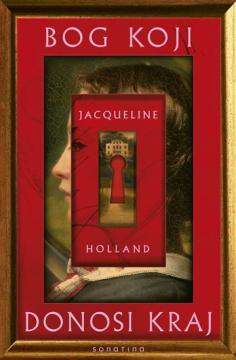
Bog koji donosi kraj
Immortal Collette LeSange has suffered from loss and inner conflict for centuries. As the owner of a daycare center in New York City, she meets a gifted boy who awakens a dark past and a lust for blood, raising the question: is eternity a gift or a curse?
The novel The God Who Brings the End (2023) is the debut work of American author Jacqueline Holland. It is an emotional, philosophical and dark story about immortality, redemption, love and human nature, combining elements of fantasy, horror and historical novel.
The main character, Collette LeSange (formerly Anya/Anna), received the gift of eternal life from her grandfather as a child in 1834. What was supposed to be a blessing turned into a century of suffering – watching loved ones age and die, constant moving, internal struggles with morality and identity and a sense of isolation. Immortality is presented not as a superpower, but as a burden that carries deep loneliness and an existential crisis.
In the modern part of the story, Collette lives a secluded life as an artist and owner of a French art kindergarten in upstate New York. Her peace is disturbed by the arrival of a talented boy from a troubled family. This encounter awakens shadows of the past and an inexplicable, growing thirst for blood, which makes her confront her own nature and moral dilemmas. The novel is not a classic vampire horror - vampirism serves as a metaphor and a tool for exploring deeper themes: the meaning of life, transience, motherhood, faith, family, and the question of whether life is a gift or a curse.
The story spans almost two centuries, leading the reader through different historical periods and locations, masterfully weaving layers about love (its strength and fragility), loss, and the search for redemption. Holland's prose is poetic, reflective, and tense, and the book questions human nature in all its complexity. It is often compared to works such as Interview with the Vampire by Anne Rice or The Invisible Life by Addie LaRue V.E. Schwab.
The book will delight readers who like existential themes, a slower pace, and deep characters. It is not an action-packed vampire novel full of sex and violence, but an introspective journey that leaves a strong impression and is long-reflective. Ideal for fans of literary fantasy and philosophical tales of immortality.
One copy is available