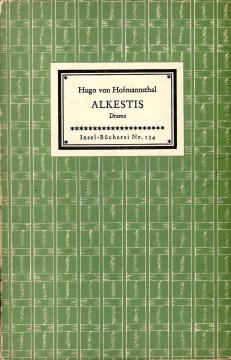
Aklestis: Drama
"Alcestis" is a modern reworking of the ancient myth about Queen Alcestis who willingly sacrifices her own life to save her husband Admetus. A drama about love, sacrifice and human moral responsibility.
The play Alcestis by the Austrian writer Hugo von Hofmannsthal is based on a well-known ancient myth that was adapted by Euripides in ancient Greece. Hofmannsthal retains the basic plot, but gives it a modern psychological and symbolic meaning, characteristic of the literature of the transition from the 19th to the 20th century.
The main character is King Admetus, who is destined to die. The gods offer him the opportunity to stay alive if someone else voluntarily dies in his place. While his parents refuse the sacrifice, his wife Alcestis accepts her own death in order to save her husband. Her decision becomes the center of the dramatic conflict and raises questions about the limits of love, loyalty and human responsibility. After Alcestis's death, Admetus is left facing guilt and the realization of the price he paid for his own life.
Hofmannsthal does not portray Alcestis only as an exemplary wife, but as a strong and morally exalted person whose sacrifice transcends personal interests. At the same time, the character of Admetus shows human weakness, fear of death and inner insecurity. The drama thus becomes more than a mythological story – it is a philosophical reflection on the meaning of life and the value of self-sacrifice.
One copy is available