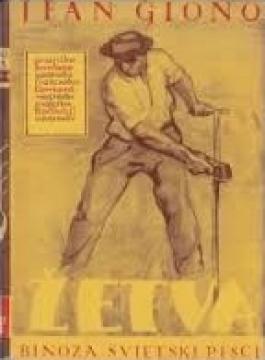
Žetva
In the abandoned Provençal village of Aubignane lives the recluse Panturle. The arrival of young Arsula changes his life and gradually brings life back to the village that was doomed to disappear. With a foreword by Josip Bogner.
The novel The Harvest was published in 1930 as the final part of Gion's "Pan Trilogy". The plot is set in the remote Provençal village of Aubignane, which is dying out. The former community has almost disappeared; only the old people and the recluse Panturle remain. The village gradually becomes a symbol of a world that is losing its vitality and connection with nature.
The main character, Panturle, is a strong but lonely man. He lives almost like a savage, without a clear goal or hope. The turning point comes when he meets Arsule, a young woman who travels with the knife sharpener Gédémus. After a series of events, Arsule stays by Panturle's side. Their love is not portrayed romantically and sentimentally, but as a life force that awakens the dormant possibilities of man. Thanks to Arsule, Panturle begins to cultivate the land again, sow grain and create a home. The renewal of their relationship becomes the renewal of the entire village.
The philosophical dimension of the novel is found in the idea of regain – second growth, re-sprouting after the harvest. This concept signifies the possibility of a new beginning after decay. Giono does not view nature as a backdrop, but as a living force with which man must establish harmony. Nature possesses an almost mythical presence; the wind, the earth and the seasons act as active participants in the plot. Man does not dominate nature, but cooperates with it.
The novel is therefore not just a story about the village but also about the resurrection of the human spirit. Love, work and connection with the land enable life to triumph over loneliness, infertility and death. The ending, which announces a new harvest and a new child, symbolises the triumph of creative energy and the future. It is precisely because of this universal message that Harvest is considered one of Giono's most important works.
Two copies are available
Copy number 1
- The cover is missing
Copy number 2
- Worn covers
- The cover is missing