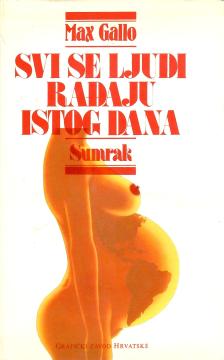
Svi se ljudi rađaju istog dana: Sumrak

Svi se ljudi rađaju istog dana: Sumrak

Max Gallo

In Twilight, the lives of seven people born in 1900 break under the weight of the wars, ideologies, and violence of the 20th century, as the initial promises of the era give way to loss, division, and historical darkness.

Twilight, the second part of the novel All Men Are Born on the Same Day, continues to follow the fates of seven people born on January 1, 1900, in different parts of the world, but now in a period when the initial differences between them turn into open historical ruptures. If Dawn was a novel about entering a century and the formation of life paths, Twilight shows what happens when these paths are overtaken by wars, ideologies, political violence and the collapse of the illusion of linear progress.

The focus is no longer just on the question of where someone comes from, but what remains of an individual when history forces them to make a choice, compromise, adapt or collapse. The characters mature in a world marked by social conflicts and global crises, and their personal decisions - love, family, moral and political - take a heavier toll than in the first part. Gallo continues to lead a parallel plot, but now with more consequences: what in Dawn was a hint of differences, here becomes an unequal distribution of power, fear, responsibility and survival.

The title Twilight accurately indicates the tone of the novel: this is a book about the fading hopes of the turn of the century. The fates of the heroes no longer unfold in a space of possibility, but in a time in which history narrows the choices and leaves permanent scars.

Original title
Les hommes naissent tous le meme jour: Crepuscule
Translation
Branka Golubović
Editor
Nenad Popović
Graphics design
Zoran Pavlović
Dimensions
19.5 x 12 cm
Pages
323
Publisher
Grafički zavod Hrvatske (GZH), Zagreb, 1981.
 
Latin alphabet. Hardcover with dust jacket.
Language: Croatian.

One copy is available

Condition:Unused
 

Are you interested in another book? You can search the offer using our search engine or browse books by category.

You may also be interested in these titles

Svi se ljudi rađaju istog dana: Zora

Svi se ljudi rađaju istog dana: Zora

Max Gallo

The first part of Gall's saga follows seven children born on January 1, 1900 in different parts of the world and shows how the beginning of the 20th century divides them from birth by class, power, and destiny.

Grafički zavod Hrvatske (GZH), 1981.
Croatian. Latin alphabet. Hardcover with dust jacket.
7.34
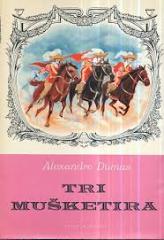
Tri mušketira 1-2

Tri mušketira 1-2

Alexandre Dumas

Dumas' version of the story depicts the adventures of d'Artagnan and his friends from 1625 to 1628.

Epoha, 1966.
Croatian. Latin alphabet. Hardcover with dust jacket.
The book consists of two volumes
9.48
Gargantua

Gargantua

François Rabelais

The birth, childhood, upbringing and warlike exploits of the giant Gargantua: a satire on scholasticism, wars, monasticism and society, with grotesque humour, enormous eating/drinking and utopian ideals.

Matica hrvatska, 1996.
Croatian. Latin alphabet. Paperback.
8.32
Vrijeme nasilja

Vrijeme nasilja

Jean-Pierre Simon

A Time of Violence (1966) is an anti-war and activist novel by French writer Jean-Pierre Simon, a lesser-known author from the mid-20th century, whose work bears traces of leftist literature of the 1930s and 1940s.

Svjetlost, 1965.
Croatian. Latin alphabet. Paperback.
2.46
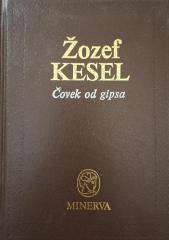
Čovek od gipsa

Čovek od gipsa

Joseph Kessel

The novel, whose original title is L'Homme de plâtre, explores complex human destinies through the story of a protagonist whose life symbolically reflects fragility and vulnerability, like plaster.

Minerva, 1987.
Serbian. Latin alphabet. Hardcover.
4.64
Pod plaštom noći

Pod plaštom noći

Claude Aveline

This collection is perfect for fans of psychological mysteries like Agatha Christie or Simenon, but with a French poetic touch.

Kosmos, 1958.
Serbian. Latin alphabet. Paperback.
2.12 - 2.14