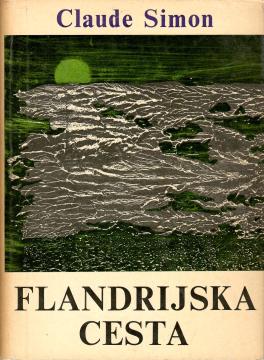
Flandrijska cesta
In Flanders Road, Claude Simon depicts the collapse of the French army in 1940 through the scattered memories of a soldier, exploring war, memory, and the fragility of human experience.
After the collapse of the French army in World War II, Georges tries to reconstruct the events that led to his captivity. As he remembers the chaotic retreat through Flanders, the death of officer de Reixach, the mysterious affair of his wife Corinne, and the possible betrayals that marked the fates of his comrades, the boundaries between past and present, reality and memory gradually blur. Instead of a linear war story, the reader is presented with a mosaic of fragments, scenes, and impressions that reflect the way the human mind remembers traumatic events.
In the novel The Flanders Road, one of the most important works of the French New Novel, Claude Simon creates an extremely demanding and hypnotic narrative in which time, perspective, and memory are as important as the events themselves. War is not depicted through heroism or grand historical gestures, but as an experience of chaos, meaninglessness, and the continuous disintegration of the world of known values.
With rich, rhythmic sentences and powerful visual images, Simon explores themes of death, love, inheritance, and the powerlessness of the individual in the face of the forces of history. The winner of the Nobel Prize for Literature, the author has created one of the key achievements of 20th-century European literature with this novel – a work that challenges, demands, and rewards the attentive reader.
One copy is available