Zanzibar ili posljednji razlog

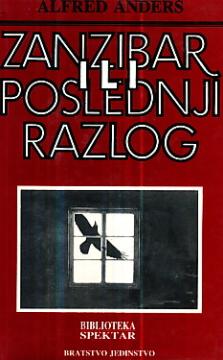
Zanzibar ili posljednji razlog

Alfred Anderš

The existentialist novel follows five alienated individuals in a small Baltic town under Nazi rule, unexpectedly brought together by a dangerous mission to save a forbidden wooden sculpture—and their own lives.

"Zanzibar or the Last Reason" (Zanzibar oder der eine Grund, 1957) is one of the most important works by the post-war German writer Alfred Andersch. Set in the autumn of 1937 in the small Baltic town of Rerik, the story unfolds over the course of just twenty-four hours. Through shifting perspectives, the novel follows five seemingly disparate characters—each bearing their own burdens, fears, and longing for freedom—within the oppressive atmosphere of the Nazi regime. The cast includes Gregor, a communist official; a boy dreaming of a distant, free Zanzibar; Judith, a Jewish girl fleeing persecution; Helander, an Old Testament pastor; and Knudsen, a fisherman. Their fates intertwine around a secret mission: saving the wooden sculpture The Reading Monk (Der Lesende Klosterschüler) by the Expressionist artist Ernst Barlach—a work the Nazis had branded "degenerate art" and slated for destruction. Andersch masterfully employs the sculpture as a symbol of human dignity, spiritual resistance, and freedom of thought. Smuggling the artwork across the border into Sweden becomes a pivotal moment in which each character discovers their own "last reason" for action and personal choice. The novel stands as a powerful existentialist study of moral responsibility, inner freedom, and resistance to totalitarianism.

Original title
Sansibar oder der letzte grund
Translation
Marina Ličen, Slobodan Miletić
Dimensions
19.5 x 12.5 cm
Pages
141
Publisher
Bratstvo-Jedinstvo, Novi Sad, 1988.
 
Distribution: 1,500 copies
 
Latin alphabet. Hardcover with dust jacket.
Language: Serbian.

One copy is available

Condition:Used, excellent condition
 

Are you interested in another book? You can search the offer using our search engine or browse books by category.

You may also be interested in these titles

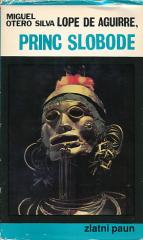
Lope de Aguirre - Princ slobode

Lope de Aguirre - Princ slobode

Miguel Otero Silva

Lope de Aguirre, Princ slobode je odraz postojanja american zajednice and stvaranja velike individualne figure koja u svijetu krvi i prijestupa poprima proporcije pjesničke alegorije.

Otokar Keršovani, 1983.
Croatian. Latin alphabet. Hardcover with dust jacket.
8.98
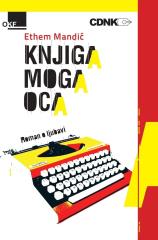
Knjiga moga oca

Knjiga moga oca

Ethem Mandić

This is a biography about my father made up of memories and mere imagination. History does not exist, and neither do facts. The past is unknown.

OKF d.o.o, 2016.
Croatian. Latin alphabet. Paperback.
10.648.51
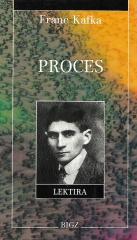
Proces

Proces

Franz Kafka

Kafka wrote The Process between 1914 and 1915, published posthumously in 1925. The novel is unfinished but with an added final chapter by Max Brod. Edition with a foreword by B. Živojinović and an afterword by Walter Killi.

BIGZ, 1990.
Serbian. Latin alphabet. Paperback.
4.26
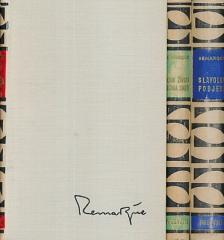
Doba života, doba smrti / Slavoluk pobjede / Ljubi bližnjega svoga

Doba života, doba smrti / Slavoluk pobjede / Ljubi bližnjega svoga

Erich Maria Remarque

Selected works of Remarque in three volumes.

SKD Prosvjeta, 1963.
Croatian. Latin alphabet. Hardcover.
The book consists of 3 volumes
14.32
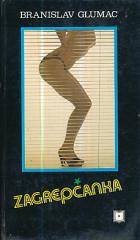
Zagrepčanka

Zagrepčanka

Branislav Glumac

Branislav Glumac published a novel without periods or commas in 1974, as the relentless stream of thought of a young rebel. Published in socialist Yugoslavia, the work caused a scandal with its openness and became a classic about generational rebellion.

IROS, 1986.
Croatian. Latin alphabet. Hardcover.
8.24
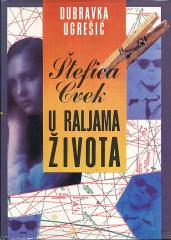
Štefica Cvek u raljama života

Štefica Cvek u raljama života

Dubravka Ugrešić

Do you like "lovelies"? Whatever you think about them, you'll enjoy this superb pastiche of trivial romance novels.

Mladinska knjiga, 1990.
Croatian. Latin alphabet. Hardcover with dust jacket.
4.94