Sto godina samoće

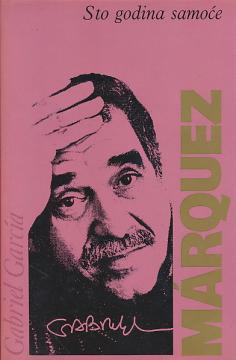
Sto godina samoće

Gabriel Garcia Marquez

A chronicle of seven generations of the Buendía family in the isolated village of Macondo. Through the family's rise and fall, Márquez portrays the destiny of Latin America, intertwining reality, magic, and inevitable solitude.

One Hundred Years of Solitude (1967) is a masterpiece by the Colombian Nobel laureate Gabriel García Márquez and a seminal novel of magical realism. The plot follows the Buendía family over the course of a century in the fictional village of Macondo, founded amidst untouched wilderness by the patriarch José Arcadio Buendía and his wife Úrsula Iguarán. Initially, the village exists in a state of mythical peace, but over time it is invaded by wars, modern technology, exploitative foreign companies, and political conflicts, thereby mirroring the turbulent history of all Latin America. The driving force of the narrative is the cyclical nature of history: generations of Buendías repeat the same mistakes, bear the same names, and succumb to the weight of their own passions, obsessions, and fatal solitude. Family members—from the bellicose Colonel Aureliano Buendía to the final descendants—vainly seek intimacy yet remain trapped within their own mental and emotional prisons. In the novel, fantastic elements—such as ascending into the sky, years-long rains, and prophecy—are portrayed as entirely ordinary parts of daily life. The story reaches its climax when the last Buendía deciphers the mysterious writings of the Gypsy sage Melquíades. At the moment he realizes the family's fate was written long ago, a devastating hurricane wipes Macondo off the face of the earth, confirming that lineages condemned to one hundred years of solitude do not get a second chance on earth.

Original title
Cien anos de soledad
Translation
Nikola Milićević
Editor
Nikola Milićević
Dimensions
20 x 14 cm
Pages
354
Publisher
Globus, Zagreb, 1985.
 
Distribution: 8,000 copies
 
Latin alphabet. Hardcover with dust jacket.
Language: Croatian.

One copy is available

Condition:Used, excellent condition
 

Are you interested in another book? You can search the offer using our search engine or browse books by category.

You may also be interested in these titles

Neverovatna i tužna istorija nevine Erndire i njene bezdušne babe: sedam priča

Neverovatna i tužna istorija nevine Erndire i njene bezdušne babe: sedam priča

Gabriel Garcia Marquez
Dečje novine, 1979.
Croatian. Latin alphabet. Paperback.
2.99
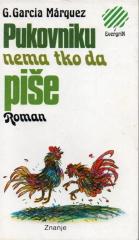
Pukovniku nema tko da piše

Pukovniku nema tko da piše

Gabriel Garcia Marquez

The Colonel Has No One to Write to by Gabriel García Márquez is a story about an old colonel who has been waiting for years for his promised state pension. In poverty and uncertainty, he refuses to lose hope.

Znanje, 1982.
Croatian. Latin alphabet. Paperback.
4.86
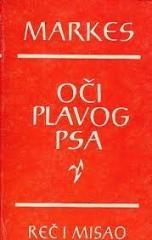
Oči plavog psa

Oči plavog psa

Gabriel Garcia Marquez

The story follows a man and a woman who love each other in shared dreams. Despite the code "Eyes of a Blue Dog" used in an attempt to find one another in waking life, the man forgets everything upon waking, leaving them in eternal solitude.

Izdavačko preduzeće "Rad", 1979.
Serbian. Latin alphabet. Paperback.
3.97 - 3.98
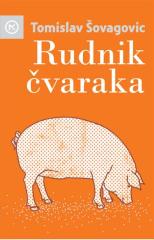
Rudnik čvaraka

Rudnik čvaraka

Tomislav Šovagović

The debut work of Croatian writer Tomislav Šovagović, awarded the Josip and Ivan Kozarac Award in 2012, is a dedication to Slavonia – the region of his childhood that the author, born in Dalmatia, observes with foreign but tender eyes.

Mozaik knjiga, 20112.
Croatian. Latin alphabet. Paperback.
11.56
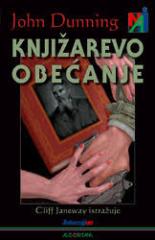
Knjižarevo obećanje: Cliff Janeway istražuje

Knjižarevo obećanje: Cliff Janeway istražuje

John Dunning

The Bookseller's Promise is the third book in the Cliff Janeway series by the award-winning John Dunning, an unusually talented and unique American writer.

Algoritam, 2006.
Croatian. Latin alphabet. Paperback.
4.50 - 4.68
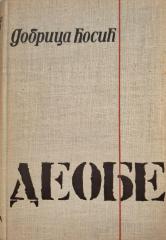
Deobe 1-3

Deobe 1-3

Dobrica Ćosić

This work, awarded the NIN Prize for that year, is considered one of the most significant in Serbian literature after World War II.

Prosveta, 1961.
Serbian. Cyrillic alphabet. Hardcover with dust jacket.
The book consists of 3 volumes
11.42