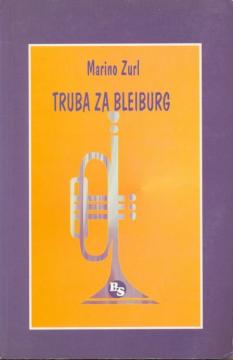
Truba za Bleiburg

Truba za Bleiburg

Marino Zurl

Marino Zurl (1929–2006), a Croatian writer and publicist, writes in his novel Trumpet for Bleiburg about one of the most controversial and taboo topics in Croatian history – the Bleiburg Massacre and the Stations of the Cross in 1945.

The author does not focus primarily on historical facts, the chronology of events, or the political causes of the mass liquidations of defeated Croatian soldiers and civilians after the surrender at Bleiburg. Instead, the novel turns to the consequences for the next generation – the children and grandchildren of the victims, those who carry the trauma, silence, fear, and inability to deal with the past in socialist Yugoslavia.

The story follows characters who try to break the wall of silence: the sons and daughters of the murdered, those who survived the camps, and those who participated in the repression. Zurl uses intimate, family perspectives, memories, dreams, and hallucinations to depict a deep wound that is passed down through generations – the “Croatian syndrome” of collective trauma, guilt, fear, and repressed identity.

The title “Trumpet for Bleiburg” symbolizes a call to wake up, to speak out loudly about a forbidden topic – the trumpet as an alarm, but also as a posthumous sign for the dead. The novel is emotional, introspective, sometimes lyrical, with elements of psychological drama and criticism of the totalitarian system that imposes silence.

The book was an important contribution to opening up the topic of Bleiburg in Croatian literature in the 1990s, when the topic was emerging from the underground. Zurl writes without pathos, but with deep compassion for the victims and their descendants, emphasizing that reconciliation is possible only through truth and memory.

Urednik
Josip Brkić
Dimenzije
20,5 x 13,5 cm
Broj strana
309
Nakladnik
Brkić i sin, Zagreb, 1997.
 
Tiraž: 1.000 primjeraka
 
Latinica. Broširano.
Jezik: Hrvatski.
ISBN
9-53-152035-6

Jedan primjerak je u ponudi

Stanje:Korišteno, u odličnom stanju
Oštećenja / nepogodnosti:
  • Signature of previous owner
Dodano u košaricu!
 

Zanima Vas i neka druga knjiga? Možete pretražiti našu ponudu pomoću tražilice ili prelistati knjige po kategorijama.

Možda će Vas zanimati i ovi naslovi

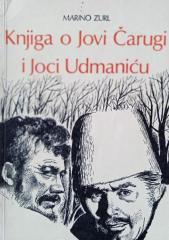
Knjiga o Jovi Čarugi i Joci Udmaniću

Knjiga o Jovi Čarugi i Joci Udmaniću

Marino Zurl

Ein berühmtes Werk des Publizisten Marin Zurlo, das das Leben zweier legendärer Hadschduken – Jovo Stanisavljević Čaruga und Joco Udmanić – erforscht, die in den 1920er Jahren durch Slawonien und Dalmatien wüteten und zu Symbolen des Widerstands gegen Ung

August Cesarec, 1972.
Hrvatski. Latinica. Broširano.
7,82
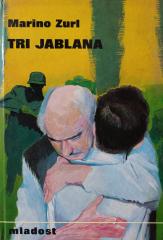
Tri jablana

Tri jablana

Marino Zurl
Mladost, 1979.
Hrvatski. Latinica. Tvrde korice.
5,62
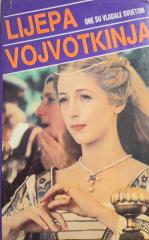
Lukrecija Borgia – Lijepa vojvotkinja

Lukrecija Borgia – Lijepa vojvotkinja

Johannes Burcardus

Der Roman über Lucrezia Borgia wurde nach den Aufzeichnungen von Bischof Burcardus, dem Kämmerer von Papst Alexander VI., verfasst.

Alfa, 1985.
Hrvatski. Latinica. Tvrde korice s ovitkom.
4,98
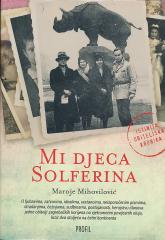
Mi, djeca Solferina

Mi, djeca Solferina

Maroje Mihovilović

Der kroatische Journalist und Schriftsteller Maroje Mihovilović schuf in seinem Roman „Wir, die Kinder von Solferino“ eine faszinierende, wahre Familiensaga, die fünf Generationen der Familie Mihovilović-Vukelić vom Ende des 17. Jahrhunderts bis ins turbu

Profil Knjiga, 2017.
Hrvatski. Latinica. Tvrde korice s ovitkom.
31,26
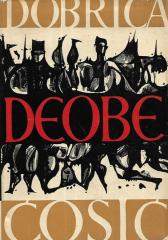
Deobe

Deobe

Dobrica Ćosić

„Deobe“ ist ein Roman über die tragische Spaltung der Serben in Tschetniks und Partisanen während des Zweiten Weltkriegs. Der mit dem NIN-Preis ausgezeichnete Roman ist Teil einer größeren epischen Trilogie, die von Ćosićs Erfahrungen und historischen Dok

Prosveta, 1963.
Hrvatski. Latinica. Tvrde korice s ovitkom.
13,74
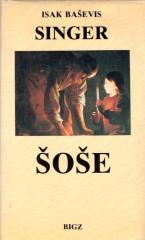
Šoše

Šoše

Isaac Bashevis Singer

„Schoscha“ (1978) ist eine intime und tragische Geschichte, die in der jüdischen Gemeinde Warschaus vor dem Zweiten Weltkrieg spielt. Mit Wärme und tiefem Humanismus geschrieben, ist der Roman ein bewegendes Porträt einer verlorenen Welt und der universel

BIGZ, 1989.
Srpski. Latinica. Tvrde korice s ovitkom.
7,34