Truba za Bleiburg

Truba za Bleiburg

Marino Zurl

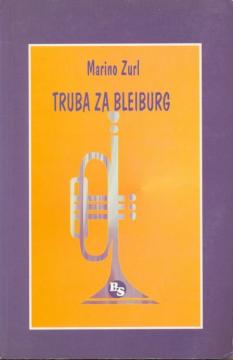
Marino Zurl (1929–2006), a Croatian writer and publicist, writes in his novel Trumpet for Bleiburg about one of the most controversial and taboo topics in Croatian history – the Bleiburg Massacre and the Stations of the Cross in 1945.

The author does not focus primarily on historical facts, the chronology of events, or the political causes of the mass liquidations of defeated Croatian soldiers and civilians after the surrender at Bleiburg. Instead, the novel turns to the consequences for the next generation – the children and grandchildren of the victims, those who carry the trauma, silence, fear, and inability to deal with the past in socialist Yugoslavia.

The story follows characters who try to break the wall of silence: the sons and daughters of the murdered, those who survived the camps, and those who participated in the repression. Zurl uses intimate, family perspectives, memories, dreams, and hallucinations to depict a deep wound that is passed down through generations – the “Croatian syndrome” of collective trauma, guilt, fear, and repressed identity.

The title “Trumpet for Bleiburg” symbolizes a call to wake up, to speak out loudly about a forbidden topic – the trumpet as an alarm, but also as a posthumous sign for the dead. The novel is emotional, introspective, sometimes lyrical, with elements of psychological drama and criticism of the totalitarian system that imposes silence.

The book was an important contribution to opening up the topic of Bleiburg in Croatian literature in the 1990s, when the topic was emerging from the underground. Zurl writes without pathos, but with deep compassion for the victims and their descendants, emphasizing that reconciliation is possible only through truth and memory.

Urednik
Josip Brkić
Dimenzije
20,5 x 13,5 cm
Broj strana
309
Izdavač
Brkić i sin, Zagreb, 1997.
 
Tiraž: 1.000 primeraka
 
Latinica. Broširano.
Jezik: Hrvatski.
ISBN
9-53-152035-6

Jedan primerak je u ponudi

Stanje:Korišćeno, u odličnom stanju
Oštećenja / nepogodnosti:
  • Potpis prethodnog vlasnika
Dodato u korpu!
 

Zanima Vas i neka druga knjiga? Možete pretražiti našu ponudu pomoću pretrage ili prelistati knjige po kategorijama.

Možda će Vas zanimati i ovi naslovi

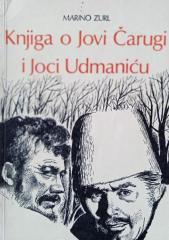
Knjiga o Jovi Čarugi i Joci Udmaniću

Knjiga o Jovi Čarugi i Joci Udmaniću

Marino Zurl

A famous work by publicist Marin Zurlo that explores the lives of two legendary hajduks – Jovo Stanisavljević Čaruga and Joco Udmanić – who rampaged through Slavonia and Dalmatia in the 1920s, becoming symbols of resistance against injustice.

August Cesarec, 1972.
Hrvatski. Latinica. Broširano.
7,82
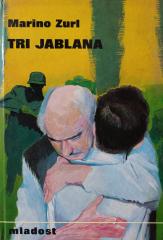
Tri jablana

Tri jablana

Marino Zurl
Mladost, 1979.
Hrvatski. Latinica. Tvrde korice.
5,62
Travnička hronika: Konsulska vremena

Travnička hronika: Konsulska vremena

Ivo Andrić

"The Travnik Chronicle" (1945) is a historical story set in Travnik from 1807 to 1814, during the Napoleonic Wars and Ottoman rule in Bosnia. Written during World War II, it is modeled after the European realist novel.

Mladost, 1962.
Srpski. Latinica. Broširano.
8,32 - 8,35
Da Vincijev kod

Da Vincijev kod

Dan Brown

The novel The Da Vinci Code is an explosive combination of a racial thriller, an essay on the history of art and religious symbolism - mysterious murders, fascinating esoterica, created during the history of the West, the nature of Mona Lisa's smile, the

V.B.Z, 2006.
Hrvatski. Latinica. Broširano.
4,86 - 4,88
Peonija, cvijet Istoka

Peonija, cvijet Istoka

Pearl S. Buck

A novel by American Nobel laureate Pearl S. Buck, set in the 19th century Chinese city of Kaifeng, known for its Jewish community. The story follows Peony, a young Chinese maid in the home of the prominent Jewish family of Ezra ben Israel.

Matica hrvatska, 1970.
Hrvatski. Latinica. Tvrde korice s omotom.
3,98 - 5,64
Madam Pompadur

Madam Pompadur

Jules de Goncourt, Edmond de Goncourt

Madame Pompadour (1878) by the Goncourt brothers follows the life of Jeanne-Antoinette Poisson, known as Madame de Pompadour (1721–1764), mistress of King Louis XV of France and one of the most influential women of the 18th century.

Epoha, 1966.
Srpski. Latinica. Tvrde korice s omotom.
1,00 - 4,99