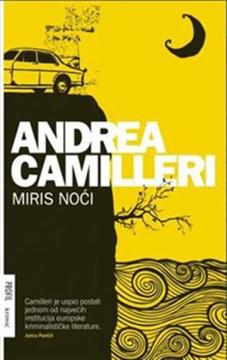
Miris noći

Miris noći

Andrea Camilleri

The Scent of the Night (2001) is part of the Inspector Salvo Montalbano series. Set in the fictional Sicilian town of Vigàtu, the novel combines crime intrigue with Camilleri's signature humor, social commentary, and vivid depictions of Sicily.

The story begins when Montalbano investigates the disappearance of Emilio Gargano, a charismatic financial advisor who has swindled scores of Vigàta residents, including small savers, taking their money under false promises of quick profits. Gargano disappears with millions, leaving behind angry clients and suspicious clues. Montalbano, with the help of his team, including Mimì Augello and the clumsy Catarelli, begins the investigation, facing public pressure and political influence.

As the investigation progresses, Montalbano discovers that Gargano's disappearance is not just a financial scam, but involves complex relationships, love affairs, and possible mafia connections. The discovery of a body leads to new questions, and Montalbano, driven by instinct and a love of Sicilian food and landscape, slowly unravels a web of lies. Key clues, including nocturnal encounters and mysterious characters, lead to an unexpected perpetrator whose motives are driven by revenge and greed.

The novel explores themes of trust, corruption, and social injustice, with an emphasis on Montalban's moral struggle between justice and pity. Camilleri masterfully portrays Sicily, its culture, and dialect, making The Scent of the Night a tense and emotionally rich work.

Naslov izvornika
L'odore della notte
Prijevod
Juraj Gracin
Urednik
Alica Gracin
Dimenzije
23 x 15 cm
Broj strana
217
Nakladnik
Profil Knjiga, Zagreb, 2011.
 
Latinica. Broširano.
Jezik: Hrvatski.
ISBN
978-9-53319-200-0

Dva primjerka su u ponudi

Primjerak broj 1

Stanje:Nekorišteno
Dodano u košaricu!

Primjerak broj 2

Stanje:Korišteno, u odličnom stanju
Dodano u košaricu!
 

Zanima Vas i neka druga knjiga? Možete pretražiti našu ponudu pomoću tražilice ili prelistati knjige po kategorijama.

Možda će Vas zanimati i ovi naslovi

Zmijsko leglo

Zmijsko leglo

Andrea Camilleri

„Zmijsko gnezdo“ (2008) je deo serijala o inspektoru Salvu Montalbanu. Smešten u izmišljenom sicilijanskom gradu Vigatu, roman kombinuje kriminalnu napetost, psihološku dubinu i Kamiljerijev prepoznatljiv humor sa kritikom društvenih problema Sicilije.

Profil Knjiga, 2014.
Hrvatski. Latinica. Broširano.
8,36
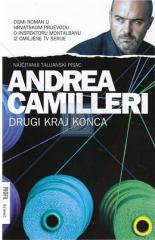
Drugi kraj konca

Drugi kraj konca

Andrea Camilleri

„Drugi kraj konca“ (2016) deo je serijala o inspektoru Salvu Montalbanu. Smešten u izmišljenom sicilijanskom gradu Vigatu, roman kombinuje kriminalnu intrigu sa aktuelnom temom migracione krize, uz Kamiljerijev karakterističan humor.

Profil Knjiga, 2017.
Hrvatski. Latinica. Broširano.
8,34
Triologija: Molloy, Malone umire, Neimenjivi

Triologija: Molloy, Malone umire, Neimenjivi

Samuel Beckett

Wie kaum ein anderer hat er die Gegenwart geprägt, und seine Helden oder „Helden“ mit ihren emotionalen und moralischen Dilemmata, belastet von existenziellen Ängsten und Nachrichten über Katastrophen und mögliche Apokalypsen, sind uns näher denn je.

Šareni dućan, 2014.
Hrvatski. Latinica. Tvrde korice.
29,38
Život je negdje drugdje

Život je negdje drugdje

Milan Kundera

Jaromil, ein junger Dichter, der von einer besitzergreifenden Mutter erzogen wurde, sucht in der Poesie und der Revolution nach einem erfüllten Leben. Seine lyrische Jugend, die Liebe und sein Idealismus führen ihn in die Konformität und zum Verrat in int

Znanje, 1979.
Hrvatski. Latinica. Tvrde korice s ovitkom.
4,86
Svjetlost se ugasila

Svjetlost se ugasila

Rudyard Kipling

Der erste Roman des englischen Nobelpreisträgers Rudyard Kipling (1865–1936), zuerst veröffentlicht im Lippincott's Monthly Magazine (Variante mit Happy End) und dann in einer Buchfassung mit tragischem Ende.

Zora, 1957.
Hrvatski. Latinica. Tvrde korice s ovitkom.
5,42
Koncert za tequilu i apaurin

Koncert za tequilu i apaurin

Edo Popović

A short novel by Edo Popović, one of the most important Croatian prose writers of the 1990s and 2000s. The book is part of Popović's "Zagreb Cycle" – a critique of transition without pathos, but through absurdity and grotesqueness.

Meandar, 2003.
Hrvatski. Latinica. Broširano.
3,26