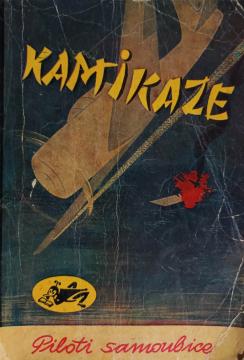
Kamikaze – Piloti samoubice

Kamikaze – Piloti samoubice

Jovan Vagenhals

Vagenhals, known for his work on East Asian history and translations of Japanese texts, prepared this compilation as one of the first Yugoslav studies on the Japanese Tokkōtai special attack units in the final phase of the Pacific War.

Vagenhals dispels the myth of the “suicide fanatics”: many of the pilots (mostly students aged 19–22 from universities in Tokyo and Kyoto) were volunteers under pressure from the military hierarchy and bushidō culture, but also forcibly recruited due to lack of resources. The chronology begins with the concept at the Battle of Leyte (October 1944), where Admiral Takaji Onishi approved the tactic. It traces the organization: air (Ohka missiles), sea (Kaiten torpedoes) and ground (Shinyō boats, Fukuryu dive mines) units, with training of only 25–30 days instead of the standard 100.

The book describes the 11 main waves of attacks up to August 1945, with a focus on personal stories: the pilots wrote haiku poems, farewell letters to their families and tied hachimaki scarves like samurai. Vagenhals cites statistics: about 3,800 pilots killed (2,500 naval, 1,300 army), 368 Allied ships damaged/sunk (47 sunk), with an efficiency of 14–17%. The work also includes translations of orders, diaries, and analyses of Japanese propaganda.

Set in the context of 1955, after de-Stalinization and Yugoslav neutrality, the work neutrally illuminates war crimes and despair, avoiding sensationalism. This is a precursor to Vagenhals' later editions on the same subject, but the 1955 original remains a rarity, emphasizing the universal theme of sacrifice in totalitarian wars. Praised for its precision and humane approach.

Urednik
Reuf Bravo
Naslovnica
Slobodan Bogojević
Dimenzije
16,5 x 11 cm
Broj strana
224
Nakladnik
Džepna knjiga, Sarajevo, 1955.
 
Latinica. Broširano.
Jezik: Srpski.

Više primjeraka je u ponudi

Primjerak broj 1

Stanje:Korišteno, u odličnom stanju
Dodano u košaricu!

Primjerak broj 2

Stanje:Korišteno, u vrlo dobrom stanju
Oštećenja / nepogodnosti:
  • Traces of patina
Dodano u košaricu!

Primjerak broj 3

Stanje:Korišteno, u dobrom stanju (tragovi korištenja)
Oštećenja / nepogodnosti:
  • Yellowed pages
  • Traces of patina
Dodano u košaricu!
 

Zanima Vas i neka druga knjiga? Možete pretražiti našu ponudu pomoću tražilice ili prelistati knjige po kategorijama.

Možda će Vas zanimati i ovi naslovi

Snažan eho brionski: Odjeci Brionskog plenuma u Bosni i Hercegovini 1966. godine

Snažan eho brionski: Odjeci Brionskog plenuma u Bosni i Hercegovini 1966. godine

Amir Duranović

Amir Duranovićs Buch rekonstruiert detailliert das dramatische Jahr 1966 und die vierte (Brion) Sitzung des Zentralkomitees der Kommunistischen Partei Jugoslawiens (1.–2. Juli 1966), auf der Aleksandar Ranković, der langjährige Vorsitzende der UDB und Viz

Udruženje za modernu historiju (UMHIS), 2017.
Hrvatski. Latinica. Broširano.
9,54
Svjedok (ne)vremena

Svjedok (ne)vremena

Branimir Lukšić

Das Buch ist sowohl ein persönliches als auch ein soziales Zeugnis der turbulenten Zeiten, die das kroatische Volk insbesondere im 20. Jahrhundert durchlebt hat.

Matica hrvatska, 1998.
Hrvatski. Latinica. Broširano.
8,14
Pisma iz Diletantije

Pisma iz Diletantije

Zvonimir Berković

Zvonimir Berković, filmski redatelj, scenarist, kazališni kritičar i esejist, na jednom mjestu donosi svoja pisma, objavljena u Globusu i Vjesniku, a upućena stvarnim i simboličnim adresatima hrvatske prošlosti i sadašnjosti.

Hena Com, 2004.
Hrvatski. Latinica. Tvrde korice s ovitkom.
7,22 - 7,24
Umiruće tijelo politike: Rat - konstitucija nacionalnog tijela

Umiruće tijelo politike: Rat - konstitucija nacionalnog tijela

Senadin Musabegović

Filozofska i teorijska studija bosanskohercegovačkog autora analizira kako je rat u Bosni i Hercegovini od 1992. do 1995. godine bio biopolitički projekat stvaranja „čistog“ nacionalnog tela kroz sistematsko ubijanje, proterivanje i silovanje „drugog“ tel

Buybook, 2019.
Hrvatski. Latinica. Broširano.
11,248,43
Što je Opus Dei? Priče o Bogu, krvi, novcu i vjeri

Što je Opus Dei? Priče o Bogu, krvi, novcu i vjeri

Noam Friedlander

The Catholic movement Opus Dei, founded in 1928 in Spain as a small devout group, is today one of the most influential and richest church organizations in the world – with millions of members, a headquarters in New York worth billions, and branches across

Naklada Ljevak, 2005.
Hrvatski. Latinica. Tvrde korice.
13,26
Sarajevski eseji: politika, ideologija i tradicija

Sarajevski eseji: politika, ideologija i tradicija

Rusmir Mahmutćehajić

What is possible to do in the face of the mystery of trust as a mediated relationship between people and the unknown of confidence as the dark content of freedom and the interactions of people?

Durieux, 2000.
Hrvatski. Latinica. Broširano.
14,82