Lav N. Tolstoj

Leo Nikolayevich Tolstoy, one of the most important Russian and world writers, was born September 9, 1828, on the Yasnaya Polyana estate into a wealthy noble family. After the death of his parents, he grew up under the guardianship of relatives. He studied oriental languages ​​and law at the University of Kazan, but did not complete his studies. He decided to live on the family estate, devoting himself to self-education and the study of philosophy, literature and natural sciences.

In 1851, he joined his brother in the army in the Caucasus, where his literary work began. During this period, realistic stories inspired by military life were written: Childhood (1852), Boyhood (1854) and Youth (1856) – a three-part autobiographical cycle that affirmed him as a new voice in Russian literature. He participated in the Crimean War, and later described his experiences on the battlefield in the prose of Sevastopol Stories (1855–1856).

After returning from the army in 1856, he traveled around Europe, where he came into contact with the ideas of Western education and democracy. Upon his return to Russia, he founded a school for village children in Yasnaya Polyana and developed his own pedagogical ideas, publishing a collection of texts Alphabet (1872) and the magazine Yasnaya Polyana Reading.

In literary terms, Tolstoy reached his peak with the monumental novels War and Peace (1865–1869)** and Anna Karenina (1873–1877).** The former is an epic fresco of the Napoleonic Wars and the Russian aristocracy, in which history, philosophy, and psychology merge into a synthesis of human experience. Anna Karenina is a psychological novel about love, morality, and social norms.

In his later years, Tolstoy went through a deep spiritual crisis and turned to moral and religious renewal. He wrote The Confessions (1882)**, followed by moral and philosophical writings in which he preached a simple life, nonviolence, and the renunciation of materialism (In What I Believe, the Kingdom of God Within You). His work strongly influenced Gandhi and the pacifist movements of the 20th century.

The narrative works of this period included masterpieces The Death of Ivan Ilyich (1886), The Kreutzer Sonata (1889), Father Sergius, and The Resurrection (1899), in which he dealt with the themes of guilt, redemption, and the meaning of life.

Due to conflicts with the Russian Orthodox Church, Tolstoy was excommunicated from the church in 1901. He died **on 20 November 1910 at the Astapovo railway station, after leaving the family estate in search of spiritual peace.

His rich bibliography includes more than 90 works: novels, short stories, essays, diaries, non-fiction, pedagogical texts and plays. Tolstoy remained a symbol of moral conscience and universal humanism, and his work is based on the idea that the true value of life is in love, work and spiritual freedom.


Titel im Angebot

Izabrana djela 8: Kavkaske pripovijetke / Sevastopoljske pripovijetke / Kozaci

Izabrana djela 8: Kavkaske pripovijetke / Sevastopoljske pripovijetke / Kozaci

Lav N. Tolstoj

The eighth volume of the Selected Works of Leo N. Tolstoy brings together the novel Cossacks, Caucasian Tales, and Sevastopol Tales, works inspired by the author's experiences from military service in the Caucasus and the Crimean War.

Matica hrvatska, 1961.
Kroatisch. Latein Schrift. Fester Einband mit Schutzumschlag.
6,84
Izabrana djela 9: Obiteljska sreća / Polikuška / Smrt Ivana Iljiča / Vlast tame / Plodovi prosvjete / Živi leš / Uspomene

Izabrana djela 9: Obiteljska sreća / Polikuška / Smrt Ivana Iljiča / Vlast tame / Plodovi prosvjete / Živi leš / Uspomene

Lav N. Tolstoj

The ninth volume of Selected Works of Leo Nikolaevich Tolstoy brings together representative short stories, plays, and autobiographical writings in which the author explores love, death, social injustice, morality, and spiritual renewal.

Matica hrvatska, 1962.
Kroatisch. Latein Schrift. Fester Einband mit Schutzumschlag.
6,42
Kozaci

Kozaci

Lav Nikolajevič Tolstoj

The Cossacks (1863) is a key work in Tolstoy's early work, a bridge between his autobiographical works and his later epics. Inspired by Tolstoy's own experiences in the Caucasus, the work lays the foundation for his critique of civilization.

Nakladni zavod Matice hrvatske, 1979.
Kroatisch. Latein Schrift. Fester Einband mit Schutzumschlag.
5,82
Krivotvoreni kupon i druge pripovijesti

Krivotvoreni kupon i druge pripovijesti

Lav N. Tolstoj

The stories Morning of a Nobleman, From the Notes of Prince Nekhludov, Marker's Notes, The Scale, Two Hussars, The Prisoner of the Caucasus, The Forged Coupon, The Death Notes of Old Man Fyodor Kuzmich, and Why? explore themes of morality, society, and sp

Nakladni zavod Hrvatske, 1979.
Kroatisch. Latein Schrift. Fester Einband mit Schutzumschlag.
5,62
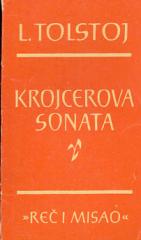
Krojcerova sonata

Krojcerova sonata

Lav Nikolajevič Tolstoj
Izdavačko preduzeće "Rad", 1964.
Serbisch. Latein Schrift. Taschenbuch.
2,50
Rat i mir

Rat i mir

Lav N. Tolstoj

War and Peace is an epic novel by Leo N. Tolstoy published between 1865 and 1869. It depicts Russian society during the Napoleonic era. It is considered one of Tolstoy's two masterpieces, along with Anna Karenina, and one of the greatest novels in the his

Globus, 2005.
Kroatisch. Latein Schrift. Hardcover.
Das Buch besteht aus zwei Bänden
22,46
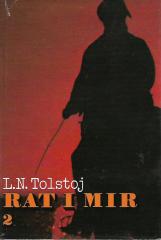
Rat i mir 2

Rat i mir 2

Lav Nikolajevič Tolstoj
Nakladni zavod Matice hrvatske, 1979.
Kroatisch. Latein Schrift. Fester Einband mit Schutzumschlag.
5,98
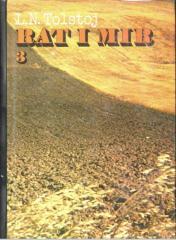
Rat i mir 3

Rat i mir 3

Lav Nikolajevič Tolstoj
Nakladni zavod Matice hrvatske, 1979.
Kroatisch. Latein Schrift. Fester Einband mit Schutzumschlag.
5,98
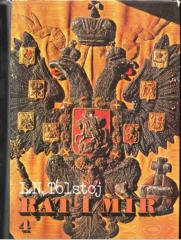
Rat i mir 4

Rat i mir 4

Lav Nikolajevič Tolstoj
Nakladni zavod Matice hrvatske, 1979.
Kroatisch. Latein Schrift. Fester Einband mit Schutzumschlag.
5,98
Rat i mir I-IV

Rat i mir I-IV

Lav Nikolajevič Tolstoj

War and Peace is an epic novel by Leo N. Tolstoy published between 1865 and 1869. It depicts Russian society during the Napoleonic period. It is considered one of Tolstoy's two masterpieces, along with Anna Karenina, and is one of the greatest novels in t

Matica hrvatska, 1972.
Kroatisch. Latein Schrift. Fester Einband mit Schutzumschlag.
Das Buch besteht aus vier Bänden
23,36